
Google's Latest Core Update: What Really Changed (And Exactly What You Should Do Next)
Google just released its first big core update of 2026. Many website owners are now seeing a big difference in their search traffic. Some pages ranked higher. Others dropped their rank or did not show up on the first page.
If your numbers look different in Google Analytics or Search Console right now, you are not alone. This update has affected almost every site. The reason is that Google wants to show searchers the most helpful, trustworthy, and easy-to-use pages.
Let me explain everything in very simple words, like I am talking to a friend who runs a small website. No confusing technical language, just clear facts and practical steps you can start today.
What Did Google Actually Change This Time?
Imagine Google as a very smart assistant that helps people find answers. In the old days, it mostly checked if your page had the right words (keywords) and if other sites linked to you.But now Google is much better at understanding real quality. It looks deeper and asks human-like questions:
Does this page actually help the person who searched?
Does it come from someone who truly knows the topic?
Is the website good and fast to use?
This 2026 core update made everyone recheck their content on the Google search system. It is not a small change. It is a big shift toward ranking pages that feel useful to real people, not just made mainly to rank high.
Google itself described it as a regular core update to reward more relevant and satisfying content. But in practice, many SEOs and site owners are calling it brutal for low-effort pages.
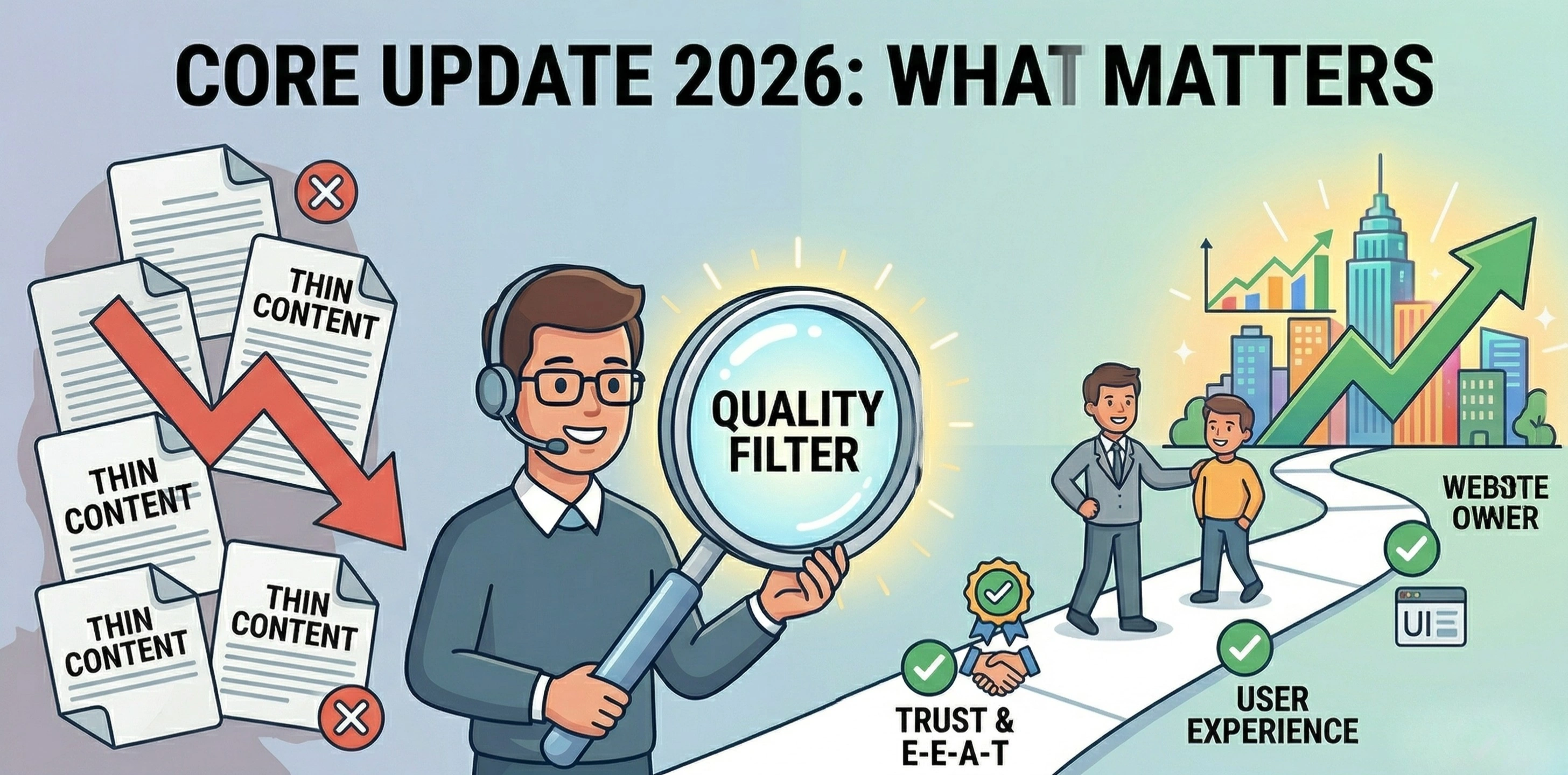
The update helps Google keep improving how it spots thin content, mass-produced material, and sites that feel spammy.

The Three Main Things That Matter More Now
1. E E A T: Experience, Expertise, Authoritativeness, Trustworthiness.
Real Expertise Beats Fake or Low-Level Knowledge. Google now looks closely for signs of genuine experience.Ask yourself: Did the writer actually use the product, visit the place, or work in the field?
Are there specific details, personal stories, honest pros and cons that only real knowledge can provide? Or does the page feel generic, like it could be about any product or any city?
Pages that just repeat what everyone else says just keep going down in ranking. Pages that add real value with real observations and experience are gaining.
2. Website Speed and Ease of Use.
Even great content can become a waste if the site is too slow and frustrates users. Google pays more attention to how fast your pages load, how much the layout shifts around while loading, and how smoothly they open on phones.Slow sites or messy mobile experiences now hurt rankings more, even if the written content is good. Google wants to send people to places that feel nice to visit.
3. AI-generated content
AI-generated content is not the problem, but quality is. Important point: Google is not banning content made with AI tools. Many good writers use AI to help brainstorm or draft.What gets penalized is lazy, unedited, mass-produced AI output that no human has carefully checked, improved, or added real knowledge to. If the final page feels robotic, repetitive, or low value, Google can spot it better now.
But if you use AI as a helper and then add your own expertise, fact-check everything, rewrite in your voice, and make it truly useful, then it can still rank well. The key question Google asks is: “Would a real person find this helpful and trustworthy?”
Who is getting affected by Google's Latest Algorithm Update?
E-commerce stores with thin product descriptions copied from manufacturers are losing their visibility on Google. The one on top is adding real buyer guides, detailed descriptions, honest reviews, and answers to common customer questions.Content sites and blogs that publish many low-quality articles are struggling. The one with a detailed, well-researched article/blog is beating low-quality ones.
Sites that rely on fake or bought reviews, especially local businesses, are facing trouble. Google is better at spotting reviews that were not honest.
Pages created mainly to use keywords without proper content that real users need are also dropping.
On the positive side, sites that already focus on quality, real author voices, and good user experience are gaining.

Simple, Practical Steps You Can Take Today
Do not panic and make random changes. Work smart and focus on your visitors first. Here is a clear action plan:Step 1: Clean Up Your Existing Content
Go through your important pages one by one. Be honest.
For each page, ask:
Does this fully answer what the searcher wants?
Does it add something new or helpful that other pages miss?
If the answer is no, improve the content or consider removing it. Deleting weak pages sometimes helps the whole site look better to Google.
Step 2: Show Your Real Expertise Clearly
Add author names and short bios on articles. Mention real experience, qualifications, or years in the field.
Include specific examples, personal observations, photos you took yourself, or data from your own work.
Link to trustworthy sources when you make a statement.
Write like a helpful human, not a robot. Use simple words. Be honest about what you do not know.
Step 3: Make Your Website Fast and Friendly
Go to Google’s free PageSpeed Insights tool. Type in your website address and check the scores.
Fix big problems: compress big images, remove unnecessary animations, and make sure buttons are easy to tap on phones.
Aim for good Core Web Vitals scores. Small fixes here can bring quick gains.
Step 4: Build Links and Trust the Right Way
Forget buying links or using tricks. Google is very good at spotting them.
Instead:
Create content so good that other people naturally want to link to it and share it.
Participate in your industry. Answer questions on forums, collaborate with others, and contribute guest posts where it makes sense.
Encourage real customer reviews and respond to them thoughtfully.
Step 5: Understand What Searchers Really Need
Before writing anything new:
Search your topic on Google.
Study the top results. What format do they use (list, guide, comparison)? What questions do they answer? Where do you need to add more?
Then create something better, deeper, clearer, or more up-to-date.
How to Check Progress
Do not refresh rankings every hour. That will do nothing; you need to be patient.What to do:
Open Google Search Console. Look at which pages lost or gained impressions and clicks.
Check if people click your result but leave quickly (high bounce rate). That may mean the title or description promises something the page does not deliver.
If people stay but do not take action, the content may need clearer step-by-step instructions.
After optimising content as per Google's core updates, it may take days or weeks to actually show any results. So don't panic, focus on long-term improvements, not quick fixes. Some sites see positive movement after they genuinely upgrade content.
The Bottom Line
Google is simply trying harder to give people the best answers, pages that are useful, honest, fast, and written by people who know their stuff.The good news? Everything Google now rewards also makes your website better for real visitors. When you help people solve problems, answer questions clearly, and provide a smooth experience. This makes both users and Google happy, which helps in search rankings.
At Digital Study School, we also teach students how to create such high-quality, SEO-friendly content using AI tools, practical training, and real-world digital marketing strategies. If you want to gain in-depth knowledge, we also offer a Digital Marketing Course in Chandigarh, where you learn in-demand skills with practical training.
Start focusing on being genuinely helpful. Write for humans first. Use tools like AI wisely, but always add your own knowledge and experience.
Take one small step today: pick your most important page and make it noticeably better. It may take time, but the results will be powerful.