
How to Create a Content Marketing Strategy in India (2026 Step-by-Step Guide)
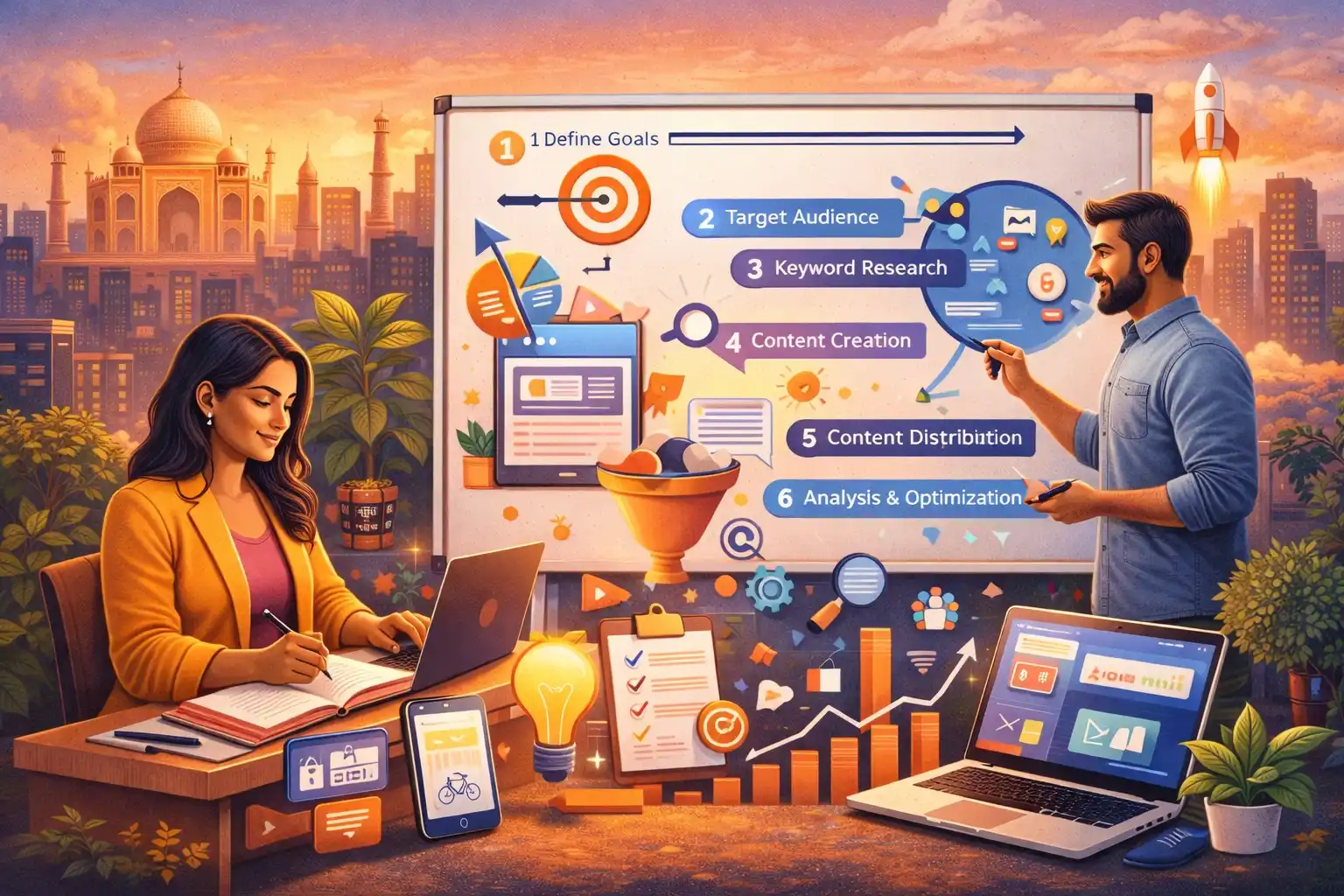
Creating a successful content marketing strategy is important for any business or individual looking to grow their online presence in India. Whether you're a startup, small business, or freelancer, having a clear content plan helps you attract the right audience, generate leads, and build long-term growth. This complete guide will teach you step for building an effective content marketing strategy.
Step 1: Define Your Content Marketing Goals
Before you start creating any content, you need to know exactly what you want to achieve. Setting clear, measurable goals gives your content marketing strategy direction and purpose.Common content marketing goals include:
-
Increasing website traffic and online visibility
-
Generating quality leads and potential customers
-
Building your personal or business brand authority
-
Boosting course enrollments or product sales
-
Improving local business visibility in your area
-
Growing social media followers and engagement
How to set effective goals:
Instead of saying "I want more traffic," say "I want to increase website traffic by 50% in the next 3 months through SEO-optimized blog content."Having clear goals helps you create focused content that delivers real results and makes it easier to measure your success.
Step 2: Understand Your Target Audience
Knowing your audience is the key to successful content marketing. In India, audience behavior varies greatly based on location, language preference, income level, and digital literacy.Key characteristics of online users:
-
Prefer simple, conversational language over complex jargon
-
Look for practical, actionable advice they can use immediately
-
Value affordable solutions and transparent pricing
-
Respond well to content that feels local and culturally relevant
-
Consume content in multiple languages (Hindi, English, Hinglish, regional languages)
-
Trust reviews and recommendations highly
How to research your audience:
-
Use Google Analytics to see who visits your website (age, location, interests)
-
Check social media insights to understand follower demographics
-
Read comments and messages to learn about their questions and problems
-
Conduct surveys or polls to get direct feedback
-
Study your competitors' audiences
Step 3: Conduct Thorough Keyword Research
Keyword research is the process of finding what your target audience is searching for on Google. This helps you create content that people are actively looking for, which increases your chances of ranking high in search results.Why keyword research matters:
-
Helps you understand customer intent and problems
-
Increases your content's visibility on search engines
-
Brings targeted traffic that's more likely to convert
-
Reduces guesswork in content creation
Types of keywords to target:
Short-tail keywords (1-2 words):-
Example: "content marketing"
-
High competition, hard to rank
-
Good for brand awareness
Long-tail keywords (3+ words):
-
Example: "content marketing strategy for small business in India"
-
Lower competition, easier to rank
-
Brings more targeted, qualified traffic
-
Higher conversion rates
Best keyword research tools for India:
-
Google Keyword Planner (free)
-
Ubersuggest (free and paid versions)
-
SEMrush (paid, professional)
-
Ahrefs (paid, professional)
-
AnswerThePublic (free, great for question-based keywords)
-
Google Search Console (free, shows what you already rank for)
keyword research tips:
-
Include location-based keywords ("digital marketing course in Mumbai")
-
Research Hinglish and bilingual search terms
-
Look for long tail question-based keywords ("how to," "what is," "why")
-
Check the "People Also Ask" section on Google for related questions
-
Analyze competitor keywords to find content gaps
Step 4: Create High-Quality, SEO-Optimized Content
Quality content is the heart of content marketing. In India, where competition is increasing daily, your content needs to stand out by being helpful, well-researched, and easy to consume.What makes content high-quality:
-
Solves real problems: Answers specific questions your audience has
-
Easy to understand: Uses simple language, short paragraphs, and clear explanations
-
Well-structured: Includes headings, subheadings, bullet points, and visuals
-
Original and unique: Not copied from other websites
-
Provides value: Offers actionable tips, not just general information
-
Uses Indian examples: Makes content relatable to the local audience
-
Mobile-friendly: Easy to read on smartphones (most Indians browse on mobile)
SEO optimization checklist:
-
Include your main keyword in the title, first paragraph, and naturally throughout
-
Use related keywords and synonyms to avoid keyword stuffing
-
Write proper meta descriptions (150-160 characters)
-
Use proper heading structure (H1, H2, H3)
-
Add internal links to other relevant content on your site
-
Include external links to authoritative sources
-
Optimize images with related file names and alt text
-
Keep URLs short and include your keyword
-
Ensure fast page loading speed
Content formats that work well in India:
-
How-to guides and tutorials
-
Step-by-step explanations
-
Comparison articles ("X vs Y")
-
List posts ("Top 10 ways to...")
-
Case studies with real results
-
Frequently Asked Questions (FAQs)
-
Video content with subtitles
-
Infographics (highly shareable)
Step 5: Distribute and Promote Your Content
Creating great content is only half the battle. You need to promote it to reach your target audience actively. In India, multi-platform distribution is key because users are spread across different channels.Content distribution channels in India:
Social Media Platforms:
-
Instagram: Great for visual content, reels, and stories
-
Facebook: Still widely used, especially in tier 2 and tier 3 cities
-
LinkedIn: Perfect for B2B content and professional networking
-
Twitter/X: Good for news, updates, and engaging conversations
-
WhatsApp: Share content directly in groups and with contacts
Video Platforms:
-
YouTube: The second most used platform in India after Google
-
Instagram Reels: Short, engaging video content
-
YouTube Shorts: Quick tips and highlights
Email Marketing:
-
Send your content directly to subscribers
-
Use newsletters to share your best content
-
Segment your email list for personalized content
Online Communities:
-
Quora: Answer questions and link to your detailed content
-
Reddit: Participate in relevant Indian subreddits
-
Facebook Groups: Share in niche-specific groups
-
Telegram channels: A growing platform for content sharing
Content promotion best practices:
-
Choose a posting time when your audience is most active
-
Use relevant hashtags (3-5 per post on Instagram)
-
Tag relevant people or brands when appropriate
-
Engage with comments and questions on your posts
-
Share in multiple groups (but avoid spam)
-
Collaborate with other content creators for cross-promotion
Step 6: Track Performance and Optimize
Tracking your content performance helps you understand what's working and what needs improvement.Essential metrics to track:
Website Metrics (Google Analytics):
-
Total website traffic and unique visitors
-
Traffic sources (organic, social, direct, referral)
-
Bounce rate (how many leave without interacting)
-
Average time on page
-
Pages per session
-
New vs returning visitors
SEO Metrics (Google Search Console):
-
Keyword rankings and position changes
-
Click-through rate (CTR) from search results
-
Impressions (how often you appear in search)
-
Crawl errors and technical issues
-
Top performing pages
-
Search queries bringing traffic
Social Media Metrics:
-
Reach and impressions
-
Engagement rate (likes, comments, shares)
-
Follower growth
-
Click-throughs to your website
-
Best performing post types
Conversion Metrics:
-
Lead generation (form submissions, sign-ups)
-
Email subscribers gained
-
Sales or enrollments
-
Call or message inquiries
How to use analytics:
-
Set up your goals in Google Analytics to track all conversions
-
Check analytics weekly to spot trends early
-
Compare month-over-month growth
-
Identify your best-performing content and create more like it
-
Find underperforming content and update or improve it
-
Notice patterns in what topics your audience engages with most
-
Test different content formats and measure results
-
Adjust your strategy based on real data, not assumptions
Essential Skills for Content Marketing Success
To build a successful career in content marketing or effectively market your business, you need to develop a combination of creative and technical skills.Core content marketing skills:
Writing and storytelling skills are the foundation of content marketing. A good content marketer must be able to write clearly and correctly across different formats such as blogs, social media posts, emails, and website pages. Strong grammar and language skills are important, but storytelling is what truly makes content powerful. When content connects emotionally with readers, it builds trust and keeps them engaged.Search Engine Optimization (SEO) is important to make content visible on Google. Content marketers need to understand on-page SEO elements like titles, headings, and meta descriptions, along with proper keyword usage. A basic understanding of how Google ranks content, link-building fundamentals, and technical SEO helps ensure that content not only reads well but also performs well in search results.
Keyword research helps content reach the right audience. Knowing how to use keyword research tools, understand search intent, and find content gaps gives marketers a competitive advantage. Analysing competitor keywords and focusing on long-tail keywords allows businesses to target users who are more likely to convert, especially in local and niche markets.
Social media marketing skills. Each platform has its own best practices, algorithms, and content styles. A content marketer should know how to create engaging posts, follow trends, manage comments and messages, and build an active community. Basic knowledge of paid social ads also helps boost visibility and reach the right audience faster.
Analytics and data interpretation skills help measure content success. Understanding tools like Google Analytics and Search Console allows marketers to track traffic, engagement, and conversions. Social media insights and conversion tracking help identify what content is working and what needs improvement, enabling smarter, data-driven decisions.
Content strategy and planning ensure consistency and long-term growth. Creating content calendars, understanding the buyer journey, and mapping content for different stages help businesses stay organised. Editorial management and campaign planning allow content teams to align content with business goals and marketing campaigns.
AI tools for content creation are becoming essential in 2026. Tools like ChatGPT and Claude help with content ideas, outlines, and drafts, while AI writing assistants speed up content production. AI image generators, grammar tools like Grammarly and Hemingway, and AI-powered SEO tools help improve quality, efficiency, and optimisation without replacing human creativity.
Additional skills and learning methods make content marketers more versatile. Basic graphic design, video editing, email marketing tools, WordPress, and project management skills add extra value. These skills can be learned through online digital marketing courses, real practice via blogs or freelance projects, internships, and by staying updated with industry blogs, communities, and Google algorithm changes.
How to learn these skills:
-
Take online courses
-
Join digital marketing institutes for structured learning
-
Practice by creating your own blog or social media content
-
Do internships or freelance projects for real experience
-
Follow industry blogs and expert content marketers
-
Join content marketing communities online
-
Stay updated with Google algorithm changes and trends
Final Thoughts
Content marketing is a proven strategy that works for businesses of all sizes. Whether you're looking to build a career, grow your business, or establish yourself as an expert, a solid content marketing strategy is essential in 2026 and beyond.The key to success is consistency. Start with one or two content types, focus on quality over quantity, track your results, and keep improving based on what works. With patience and persistence, content marketing can transform your online presence and open up numerous opportunities.
FAQs
1. Does content marketing actually work in India?
Yes, it works really well. Most people in India go online to research before they buy anything or make a decision. When you share helpful blogs, videos, or social media posts, you're building trust with potential customers. Good content also brings free traffic from Google over time. If you focus on SEO and post regularly, content marketing usually gives you better returns than just running ads.
2. How long before I see results from content marketing?
You'll typically need to wait 3 to 6 months to see real results in India. Blog posts take time to show up on Google, but once they do, they keep bringing in visitors. Social media content gets likes and comments faster, but actual sales take longer. The key is to stay consistent and keep improving what you're doing.
3. Where should I post my content in India?
It depends on who you're trying to reach. Google and blogs are great for getting steady traffic. YouTube and Instagram Reels work well if you make videos. WhatsApp is perfect for sharing content directly with customers. LinkedIn is the go-to if you're selling to other businesses. Honestly, using a mix of these platforms gives you the best results.
4. Should small businesses in India bother with content marketing?
Absolutely. Content marketing is perfect for small businesses because it doesn't cost much and builds your presence over time. With the right content strategy, you can compete with bigger companies by focusing on local search terms, answering questions your customers have, and earning their trust all without spending a fortune on advertising.