
What Is SEO? The Ultimate Guide for Beginners
You have the best products and the best prices, but there are no roads that lead to your door.
This is exactly what happens to a website without SEO.
In the digital world, Google is the road builder. If you want customers to find your store (website) among the billions of others online, you need to give Google a roadmap. That roadmap is SEO.
If you are a business owner, a student, or a budding marketer, this is a guide that breaks down the complex world of Search Engine Optimization into simple strategies that actually work in 2026.
The Core Definition: What Does SEO Actually Mean?
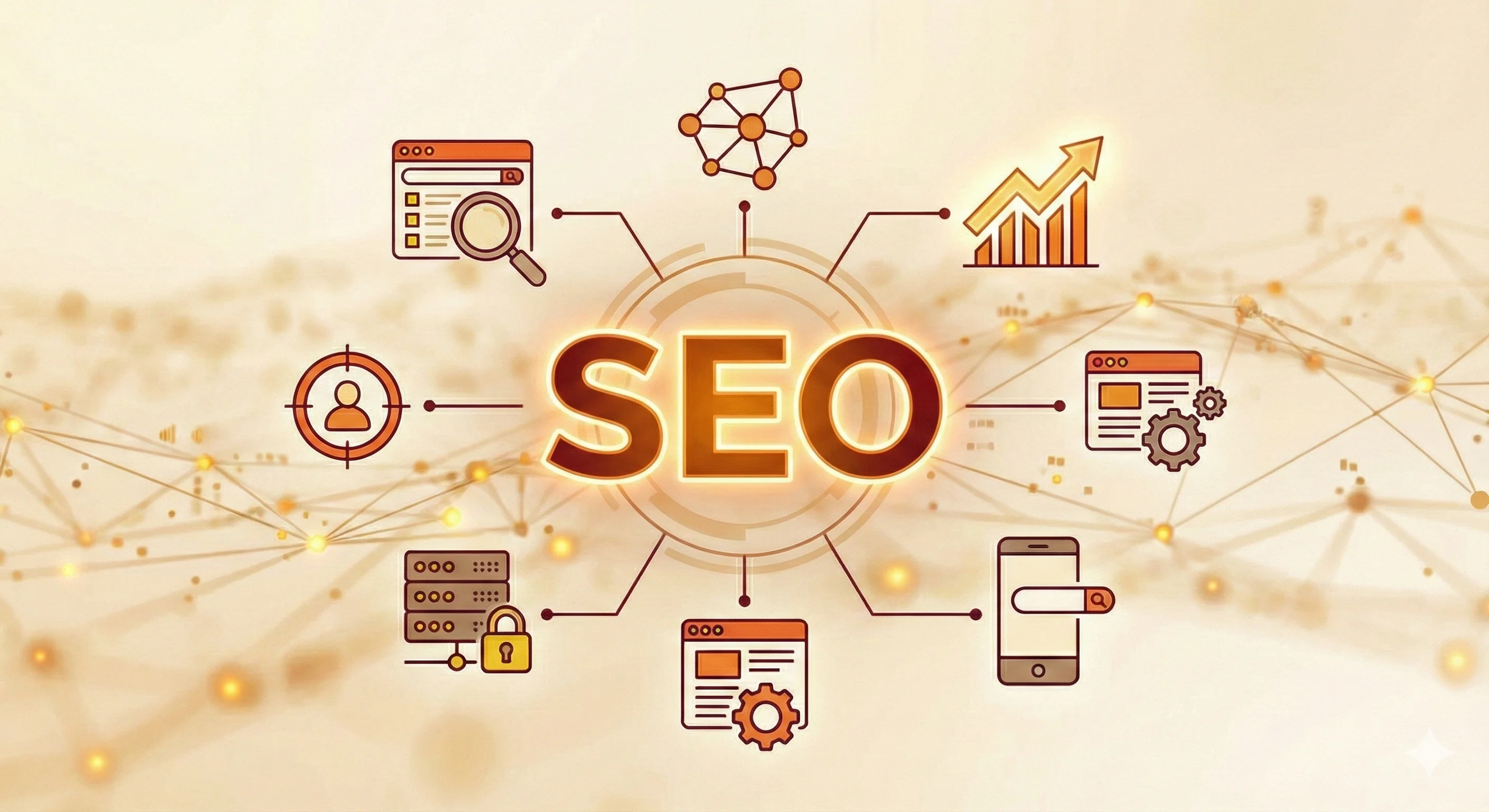
SEO (Search Engine Optimization) is the process of improving your website to increase its visibility when people search for products or services related to your business on search engines like Google, Bing, or Yahoo.
SEO is simply the art of convincing search engines that your content is the best answer to a user’s question compared to others.
-
Paid Ads (PPC) are like if you rent an apartment; the moment you stop paying the rent, you are kicked out.
-
SEO is like buying a house; it takes time to build, but once you own the spot, it’s an asset that pays you back forever.
How Search Engines "Think" (The 3-Step Process)
To win at SEO, you need to think like a robot. Google uses bots that constantly scan the internet. Here is their 3-step routine:1. Crawling ( Google bots explore your site)
The bots are on the internet looking for new URLs, code, and content to crawl through.-
SEO Tip: If your site structure is messy, bots can't crawl it.
2. Indexing (Google files your page in its database)
Once found, the bot analyzes your page. It tries to understand what this page is about. It then files your page in a huge database called the Index.3. Ranking (Google decides if your page deserves Page 1)
When a user types "Best Pizza in [City]," Google’s algorithm checks the Index. It uses over 200 ranking factors to decide which page is the most relevant and trustworthy to show at #1.The 3 Pillars of a Winning SEO Strategy
You cannot win with just good content or just a fast website. You need these 3 pillars of SEO:1. On-Page SEO: Content & Intent
This is basically everything that happens on your website.-
Keyword Intent: Don't just stuff keywords like "best shoes." Understand why they are searching. Are they looking to buy or learn (Informational)?
-
E-E-A-T: Google prioritizes content that has Experience, Expertise, Authoritativeness, and Trustworthiness.
-
Header Tags: Using H1, H2, and H3 tags helps Google understand your article's content easily.
2. Off-Page SEO: Authority & PR
This shows Google your reputation in the digital world.-
Backlinks: Think of a backlink as a reference. If a high-authority site links to your blog, Google assumes you are important.
-
Brand Mentions: Even unlinked mentions of your brand name on social media add to your authority.
3. Technical SEO: Health & Performance
-
Site Speed: Users leave if a site takes more than 3 seconds to load. Google knows this and prioritizes fast sites.
-
Mobile-First Indexing: Google looks at the mobile version of your site first. If it looks bad on a phone, your website won't rank on a desktop either.
-
Security (SSL): If your site doesn't have HTTPS (the secure padlock), Google warns users it’s "Not Secure."
Why Is SEO “Better” Than Social Media?
Social media is powerful, but it mostly works on interruption marketing. This means you are showing ads or posts to people while they are scrolling for fun, not because they are looking for your service. Many people simply skip ads or ignore sponsored posts.SEO works in a more natural and useful way.
SEO Reaches People at the Right Time
When someone searches on Google like:-
“digital marketing course after 12th”
-
“Best digital marketing institute in Chandigarh”
SEO Gives Long-Term Results
Social media ads work only till you spend money. The moment you stop paying, the leads stop coming.SEO is different. A well-written blog or optimized page can bring traffic for months or even years without spending money.
That is why SEO is considered a long-term investment, not a temporary solution.
People Trust Google More Than Ads
Most users trust organic Google results more than social media ads. When your website ranks on the first page of Google, people automatically see your brand as more trustworthy and professional.Higher trust means:
-
Better quality enquiries
-
Higher conversion rates
-
Stronger brand image
SEO Brings Better Quality Leads
Social media shows your content to everyone. SEO brings only those people who are searching for your service. These users are more likely to take action, call, or fill out a form.Conclusion: The Best Time to Start is Now
Google changes its algorithm thousands of times a year, but the core rule remains the same. If you create a website that is fast, easy to use, and packed with helpful, expert information, Google will reward you.Don't wait for traffic to appear by itself. Start optimizing your titles, speeding up your images, and writing content that solves problems today. You can join an online digital marketing course where you can learn from SEO experts.