Colour Psychology in Marketing: How the Colours You Choose Are Silently Influencing Your Customers
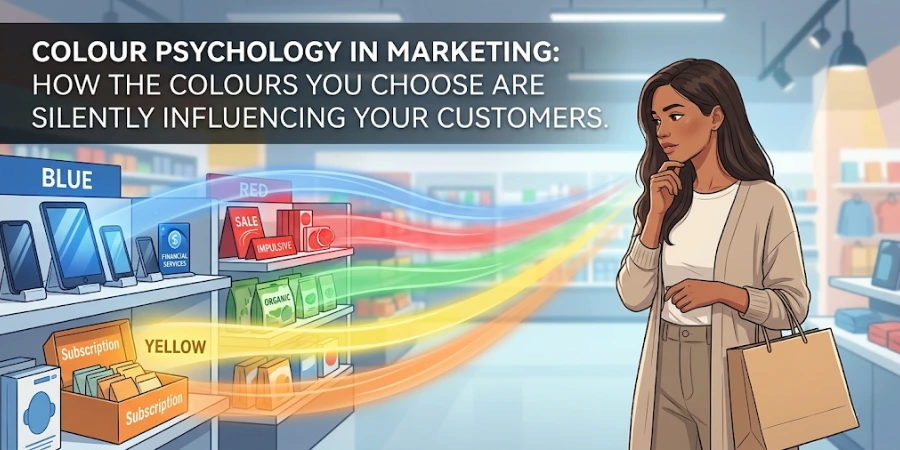
Let me ask you something. When you walk into a fast-food restaurant, have you ever noticed how almost all of them use red and yellow? McDonald's, KFC, Pizza Hut, Burger King, the colours are different shades, but the pattern is consistent. That's not a coincidence, and it's not a budget decision. Red stimulates appetite and creates a sense of urgency. Yellow triggers feelings of happiness and warmth. Together, they make you feel hungry, happy, and in a hurry, which is exactly what a fast food brand wants.
This is colour psychology, and it's one of the most quietly powerful tools in marketing. You don't need a massive advertising budget or a design degree to use it. You just need to understand what colours are communicating to your customers before they've read a single word on your page.
Why Colours Have So Much Power Over Us
Before we get into specific colours, it's worth understanding why this works at all. Why would something as simple as a colour influence whether someone buys a product or trusts a brand?The answer comes down to how quickly the human brain processes visual information. Studies suggest that people form a first impression of a brand in under ninety seconds, and a significant portion of that judgment is based entirely on colour. Not the headline. Not the product description. Only by the colour.
This happens because our brains have been associating colours with real-world experiences for our entire lives. Blue is the colour of clear sky and calm water, so we associate it with safety and reliability. Green is the colour of nature and fresh growth, so it feels healthy and balanced. Red is the colour of fire and warning signs, so it demands attention and power.
Understand the psychology behind the colour for marketing

Red is the most psychologically intense colour in marketing. It physically speeds up your heart rate slightly and creates a sense of excitement and urgency. This is why red is so common on sale banners, limited-time offer buttons, and clearance sections. When you see "50% OFF" written in red, the colour itself is amplifying the urgency of the message.
What red communicates:
-
Urgency and immediate action: it pushes people to decide now rather than later
-
Excitement and high energy: it raises emotional intensity in whoever sees it
-
Passion and confidence: which is why it works for bold, direct brands
-
Danger or warning: used carefully, this creates scarcity ("only 2 left in stock")
-
Appetite stimulation: which is exactly why the food industry loves it so much

Blue is the most trusted color in the marketing world. Look at the logos of PayPal, Facebook, LinkedIn, Samsung, Ford, and most major banks and insurance companies, uses almost all some shade of blue. That's not a coincidence. Blue has a calming effect on the nervous system, which is the opposite of what red does, and that calm translates directly into trust.
What blue communicates:
-
Security and reliability: it tells customers they are in safe hands
-
Professionalism and competence: it signals that a brand takes itself seriously
-
Loyalty and dependability: which is why long-term service brands lean on it heavily
-
Intelligence and logic: making it a natural fit for tech companies and financial institutions
-
Calm confidence: it lowers psychological resistance and makes decisions feel less risky
-
Cleanliness and order: lighter shades of blue feel fresh and organised

Green carries two distinct associations that happen to work beautifully together in marketing. First, it connects to nature, health, and balance. Second, in many cultures, green is the colour of money and financial growth. That's a surprisingly powerful combination for the right brand.
What green communicates:
-
Health and wellness: it's the colour of clean, natural, and organic
-
Growth and progress: both in a financial sense and a personal development sense
-
Environmental responsibility: eco-friendly brands use it to signal their values instantly
-
Balance and harmony: it feels neither too aggressive nor too passive
-
Permission and positivity: think of a green traffic light, it subconsciously says "go ahead"
-
Freshness: lighter greens feel clean, crisp, and new
Yellow is the first colour the human eye notices, which makes it one of the most attention-grabbing tools in a designer's toolkit. It's warm, energetic, and impossible to ignore when used well. But it's also the easiest colour to overuse, and too much yellow can flip from cheerful to overwhelming very quickly.
What yellow communicates:
-
Optimism and happiness: it's one of the most emotionally positive colours psychologically
-
Warmth and friendliness: it feels approachable and open rather than cold or corporate
-
Creativity and curiosity: it's often associated with ideas and innovation
-
Caution when overdone: large blocks of yellow can feel anxious or unsettling
-
Youthfulness and playfulness: younger audiences respond particularly well to it
-
Affordable and accessible: which is why budget brands often reach for yellow

Orange sits at an interesting psychological intersection. It takes the urgency of red and softens it with the warmth of yellow, creating a colour that feels energetic and enthusiastic without being aggressive. People respond to orange as though it's exciting but approachable, which is a rare and valuable combination in marketing.
What orange communicates:
-
Enthusiasm and confidence: it feels bold without being intimidating
-
Affordable value: it signals a good deal without the desperation that sometimes comes with red
-
Friendliness and accessibility: it's warm enough to feel human and approachable
-
Creativity and originality: it stands out without screaming for attention
-
Motivation and drive: which make it popular in fitness and self-improvement marketing
-
A sense of fun: it's playful enough to attract younger audiences without being childish

Black communicates something that no other colour can quite replicate: the sense that something is rare, serious, and worth paying a premium for. Nike, Chanel, Apple, and Rolex all lean heavily on black because it creates an immediate perception of quality and exclusivity.
What black communicates:
-
Luxury and premium quality: it is the colour most associated with high-end products
-
Power and authority: it commands respect and signals confidence
-
Sophistication and elegance: it never feels cheap or casual when used well
-
Exclusivity: It suggests that not everyone can afford this, which ironically makes people want it more
-
Mystery and depth: it draws people in with a sense of Fascination
-
Timelessness: unlike trendy colour choices, black never goes out of style
White is clean, minimal, and honest, but its real superpower in marketing is what it does to everything around it. White space gives the eye room to rest, which makes the important elements on a page stand out more sharply.
What white communicates:
-
Simplicity and clarity: it removes distraction and focuses attention
-
Cleanliness and purity: it feels fresh, hygienic, and trustworthy
-
Premium minimalism: used as Apple does, it signals confidence through restraint
-
Openness and honesty: it has nothing to hide, which builds a subtle form of trust
-
Space and breathing room: it makes content feel less overwhelming and easier to process
-
Modern sophistication: minimal white designs feel contemporary and well-considered

Purple is one of the most underused colours in marketing, which is actually an argument for using it more deliberately. Historically associated with royalty and wealth, purple has a unique combination of the energy of red and the calm of blue.
What purple communicates:
-
Royalty: it has centuries of cultural association with luxury and status
-
Creativity and imagination: it feels artistic and unconventional in the best way
-
Wisdom and spirituality: which makes it popular in wellness, meditation, and coaching spaces
-
Mystery: it creates curiosity in a way that more straightforward other colours don't
-
Femininity in softer shades: lighter purples and lavenders are commonly used in beauty and skincare
-
Ambition and vision: it suggests someone who thinks bigger than the ordinary
How to Actually Apply This to Your Marketing
Understanding colour psychology is useful. Knowing how to apply it is what actually moves your results. Here's how to think about it practically.Your call-to-action button is the most important colour decision on any page. This single button, whether it says "Buy Now," "Enroll Today," "Get a Quote," or "Start Free Trial", needs to stand out clearly from everything around it. The goal is to make it impossible to miss. Red and orange are the most common choices because they create urgency and draw the eye. Green works well for lower-pressure actions. Whatever colour you choose, make sure it contrasts sharply with the background behind it. A blue button on a blue background converts terribly, no matter how good the copy is.
Match your colours to the emotion your audience needs to feel. Before choosing any colour, ask yourself: what does my customer need to feel to trust me and buy from me? Like with insurance, financial services, or healthcare, blue should be dominant. For fitness, coaching, or creative services, red, orange, or yellow accents can work well. If they need to feel healthy and responsible, like with organic food or wellness products, green is your strongest option.
Stay consistent across every touchpoint. Your website, your social media posts, your email newsletters, and your ads should all speak the same colour language. This consistency builds brand recognition over time. The more consistently you show up in the same colours, the faster people will recognise your brand before they even read your name. Think about how immediately recognisable Coca-Cola's red is, or Tiffany's particular shade of blue-green. That recognition was built through decades of relentless consistency.
Test before you commit permanently. Here's something that professional marketers know and beginners often skip: colour preferences can vary by audience, industry, and even geography. What works brilliantly for one brand might underperform for another. Run A/B tests on your most important buttons and landing pages. Change one colour at a time, measure the results, and let real data guide your decisions. You might discover that your audience responds much better to green than orange, or that a darker shade of blue builds more trust than a lighter one.
The Bottom Line
Colours are working on your customers whether you're thinking about them or not. Every page you publish, every ad you run, every button on your website is already making an impression. The question is whether that impression is intentional or accidental.The good news is that colour psychology isn't complicated once you understand the basics. You don't need a professional designer to start using it effectively. You just need to understand what emotions you want your audience to feel, choose colours that support those emotions, stay consistent, and test what works.
Small changes to the colour of a single button have increased conversion rates by double digits for businesses that tested them properly. That's the kind of improvement that costs nothing but attention.
Start paying attention to the colours around you.
If you want to gain in-depth knowledge, we also offer a Digital Marketing Course in Chandigarh, where you learn in-demand skills with practical training.