
How to Build a Digital Marketing Portfolio Without Job Experience (Step-by-Step Guide)
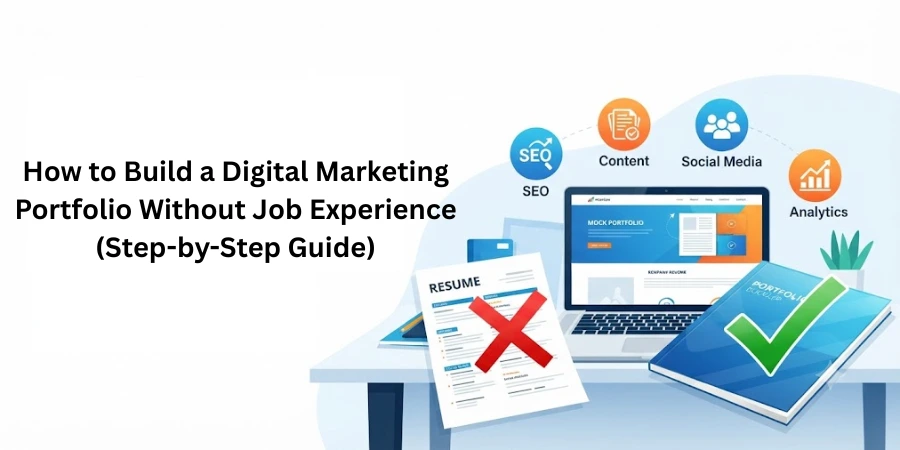
Almost every digital marketing job posting asks for "experience," yet nobody wants to hire someone without it. This is the trap that stops most beginners before they even apply.
The good news is that digital marketing is a skill-based career, not a credentials-based one. Recruiters don't hire certificates; they hire people who can research an audience, build a strategy, and show results. A portfolio proves that, even without a marketing job title.
In our experience, most beginners assume they need a company to hire them before they can build a portfolio. That's backwards. This guide walks through the exact steps of choosing a specialisation, creating real projects, writing case studies, building a portfolio website, and using it to land internships, jobs, and freelance clients.
Quick Answer: Can You Build a Digital Marketing Portfolio Without Experience?
Yes. A portfolio is proof of skill, not proof of past employment. You build it through self-initiated projects, SEO audits, social media campaigns, ad plans, and content strategies for real or fictional businesses.What matters to employers is whether you can think strategically, solve a marketing problem, and explain your decisions. None of that requires a job title. It requires practice, documentation, and a place to show your work.
What Is a Digital Marketing Portfolio?
A digital marketing portfolio is a curated collection of your work projects, campaigns, strategies, and results that shows what you can actually do. It's evidence, not a list of claims.Its purpose is simple: it lets a recruiter see your thinking process instead of just reading a sentence that says "strong marketing skills" on a resume.
Digital Marketing Resume vs Portfolio
A resume shows your education, certifications, skills, and work history in list form. It tells an employer what you know.A portfolio shows your work examples, strategy, problem-solving process, and outcomes. It tells an employer what you can do.
Both matter, but for beginners without work history, the portfolio is what actually gets you the interview. The resume gets you noticed; the portfolio gets you believed.
Why Do Beginners Need a Digital Marketing Portfolio?
Employers Want Evidence, Not Only Certificates
Certificates prove you completed a course. They don't prove you can apply what you learned to a messy, real-world problem, which is what the job actually requires.In our experience, what separates a strong beginner candidate from an average one is rarely the number of certificates on their resume. It's whether they've actually attempted a project, made decisions, and can explain why they made them. A portfolio is where that difference becomes visible.
What Hiring Managers Actually Look For in a Digital Marketing Portfolio
Hiring managers usually review a portfolio in minutes, so what they scan for is specific.1. Strategic Thinking
Can you identify a target audience, set a realistic goal, and map out a customer journey? A project that jumps straight to "post on Instagram" without explaining who it's for and why signals a lack of strategic thinking.2. Problem-Solving Ability
Screenshots alone don't prove much. A hiring manager wants to see the problem you identified and the decisions you made to address it, not just the finished result.3. Ability to Measure Results
Marketing without measurement isn't marketing; it's guessing. Projects that reference tools like Google Analytics, Search Console, or platform-native insights show you understand that performance needs to be tracked, not assumed.4. Communication Skills
Marketers constantly explain decisions to clients, managers, and teams. A portfolio that clearly explains "why" behind each choice demonstrates the communication skill recruiters can't assess from a resume alone.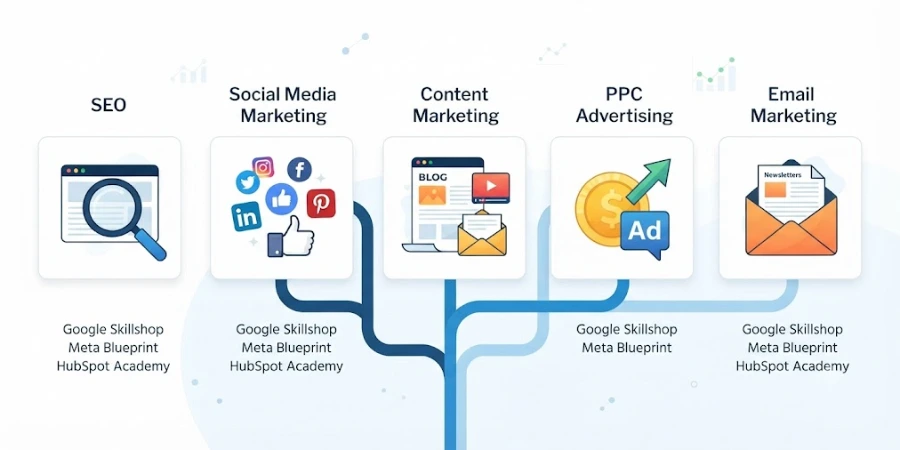
Step-by-Step: How to Build a Digital Marketing Portfolio Without Experience
Step 1: Choose Your Digital Marketing Specialisation
Before creating anything, decide on a general direction: SEO, social media marketing, content marketing, paid advertising, email marketing, or analytics.One common problem we see in beginner portfolios is a random mix of unrelated projects: one Instagram post, one blog outline, one ad screenshot with no clear focus. This makes it harder for a recruiter to understand what role you're actually suited for.
You don't need to pick forever. Just pick a direction strong enough to build two or three connected projects around, so your portfolio tells a consistent story about your strengths.
Step 2: Create Practical Digital Marketing Projects
You don't need a client or an employer to create real projects. You need a real or fictional business and a genuine attempt to solve its marketing problem.SEO Portfolio Project
Pick a local business, real or invented, say, a neighbourhood bakery. Build out:-
Keyword research showing search terms customers would actually use, like "fresh sourdough bread [city]"
-
A competitor analysis comparing two or three similar local bakeries
-
A content plan with blog or page topics targeting those keywords
-
On-page SEO recommendations: title tags, meta descriptions, internal linking, image alt text
-
A simple tracking plan explaining how you'd measure ranking and traffic progress
Social Media Marketing Project
Build a 30-day Instagram strategy for a café. Include:-
Content pillars, such as behind-the-scenes, menu highlights, customer stories, and local events
-
Specific post and Reel ideas tied to each pillar
-
A realistic posting schedule
-
An engagement plan explaining how you'd respond to comments and grow local followers
-
A short analysis of what metrics you'd track: reach, saves, profile visits and why
Google Ads Project
Create a campaign plan for a local service business, like a plumber or a salon. Include audience research, a keyword list split into match types, sample ad copy with headlines and descriptions, and a landing page recommendation explaining what should change to improve conversions.Content Marketing Project
Build a three-month blog strategy for a fictional ecommerce store, including topic clusters, a publishing calendar, and an explanation of how each piece supports a buyer's journey stage.How to Create a Marketing Case Study for Your Portfolio
A screenshot shows what you did. A case study shows how you think, and that's what actually gets you hired. Use this structure for every project:-
Project Overview — What the business is and what you were trying to achieve
-
Marketing Goal — The specific objective, such as increasing local visibility or engagement
-
Research — What you learned about the audience, competitors, or market before acting
-
Strategy — The plan you built and why you chose it over alternatives
-
Execution — What you actually created: content, campaigns, pages, ads
-
Measurement — How you'd track or did track performance
-
Learnings — What worked, what you'd change, and what you learned
Digital Marketing Portfolio Examples for Beginners
Example 1: SEO Portfolio — An SEO audit and improvement plan for a small business website. This proves you can research keywords, understand technical basics, and think about organic growth.Example 2: Social Media Campaign — A month-long content strategy with sample posts and an engagement plan. This proves creativity paired with structure, not just aesthetic sense.
Example 3: Content Marketing Strategy — A blog or content calendar mapped to a buyer's journey. This proves you understand how content supports business goals, not just writing ability.
Example 4: Google Ads Campaign — A paid campaign plan with keyword targeting and ad copy. This proves you understand budget-conscious, ROI-driven thinking.
How Many Projects Should a Beginner Include?
Quality beats quantity, every time. Three to six strong, well-documented projects will outperform twelve rushed ones.A valuable project has a clear goal, real research behind it, a documented strategy, and an honest reflection on results or expected results. A weak project is just a finished asset with no explanation attached. Recruiters remember portfolios that show thinking, not ones that show volume.
Digital Marketing Portfolio Website Structure
Homepage
Include a short introduction of who you are, your core skills, two or three featured projects, and a clear call-to-action, such as "View my case studies" or "Contact me."Project Pages
Each project should have its own page structured around the challenge, your strategy, the execution, and the results or expected outcomes.About Page
Share your background, your learning journey into digital marketing, and relevant certifications, kept honest and specific rather than generic.Best Portfolio Platforms for Digital Marketers
Personal Website — Gives you full control over design and structure, and signals initiative. The downside is the extra setup time, though free tools now make this manageable in a weekend.LinkedIn Portfolio — The Featured section on LinkedIn lets you showcase projects directly where recruiters are already looking. It's low-effort to start but limited in design flexibility.
Notion Portfolio — A beginner-friendly, fast option for organising case studies without needing design skills. Good for getting started quickly, less polished for a final public-facing portfolio.
Behance — Works well if your projects lean visual, such as social media creatives or ad designs, but it's less suited for strategy-heavy SEO or analytics projects.
Digital Marketing Portfolio Checklist
-
Professional introduction
-
Clear marketing skills list
-
Real, documented projects
-
Case studies, not just screenshots
-
Analytics or performance screenshots where relevant
-
Relevant certifications
-
Link to your resume
-
Updated LinkedIn profile
-
Easy-to-find contact information
Common Digital Marketing Portfolio Mistakes Beginners Make
Only showing certificates — Certificates alone don't prove applied skill. Add projects showing you using what you learned.No real projects — A portfolio without original work is just a resume in another format. Build at least three projects before applying.
Adding screenshots without explanation — A screenshot with no context tells a recruiter nothing about your thinking. Explain the decision behind it.
No marketing strategy — Jumping straight to execution without explaining "why" makes your work look accidental rather than intentional.
No measurable outcomes — Even in a fictional project, explain what you'd track and why. This shows you understand accountability.
Poor design — A cluttered or inconsistent layout distracts from good work. Keep it simple and consistent.
Too many unrelated projects — A portfolio with no clear direction confuses recruiters about what role you're suited for. Stay focused on one specialisation.
Copying templates without customisation — Generic, copy-pasted project ideas are easy for experienced recruiters to spot. Make projects specific and personal.
Ignoring personal branding — An inconsistent name, tone, or style across your resume, LinkedIn, and portfolio makes you harder to remember.
No LinkedIn optimisation — Many recruiters check LinkedIn before your portfolio. An outdated profile undermines strong project work.
Not updating the portfolio — A portfolio unchanged for a year signals stalled learning. Add new projects as your skills grow.
Making it difficult to contact you — Hidden or missing contact details cost you opportunities that were otherwise ready to happen.
Should You Add Certifications to Your Digital Marketing Portfolio?
Yes, but as support, not as the centrepiece. Certifications from Google, Meta, or HubSpot show you've studied the fundamentals, but they don't replace applied proof.Many students focus on certificates, but hiring managers usually look past the certificate title straight to whether you've used those skills on a real or simulated project. List certifications on your about page and resume, but let your projects carry the weight of your portfolio.
Can ChatGPT and AI Projects Be Added to a Digital Marketing Portfolio?
Yes, when they demonstrate marketing thinking rather than just tool usage.A weak example is pasting an AI-generated caption with no context. A strong example is using AI to draft ten headline variations, then explaining which one you chose, why it fit the audience, and how you'd test it. The AI tool isn't the impressive part; your judgment in using it is.
How to Optimise LinkedIn for Digital Marketing Jobs
Your headline should state your specialisation clearly, not just "job seeker"; something like "Aspiring SEO Specialist | Building Real Projects."Your About section should briefly explain your background, your focus area, and a link to your portfolio. Use the Featured section to pin your best two or three projects directly on your profile. Posting occasional content about what you're learning also shows recruiters ongoing initiative, not just a static profile.
How to Use Your Portfolio to Get Internships and Jobs
Attach your portfolio link to every application resume, cover letter, and LinkedIn message. Don't rely on recruiters to find it themselves.Customise which projects you highlight based on the role. If a job emphasises social media, lead with your social campaign project, not your SEO audit. Before interviews, prepare short, confident answers about why you made each decision in your top two projects; this is almost always where the conversation goes next.
Interview Questions Recruiters Ask About Your Portfolio
-
Why did you choose this strategy over other options?
-
What would you improve if you did this project again?
-
How did you measure success?
-
What did you learn from this project?
How to Use a Digital Marketing Portfolio for Freelancing
For freelancing, your portfolio needs to do more than prove skill; it needs to build trust with a stranger who's about to pay you.Choose a niche, such as local service businesses or ecommerce brands, so your projects speak directly to the clients you want. Create simple service pages explaining exactly what you offer. Lead with case studies rather than a project list, since clients care more about the problem you solved than the tools you used. Testimonials come later; early on, clear, well-documented projects are what build initial trust.
30-Day Digital Marketing Portfolio Building Plan
Week 1 — Choose your specialisation and complete your first project, from research through to a documented case study.Week 2 — Build a second project in the same specialisation, plus a short case study for each.
Week 3 — Build your portfolio website or page, and optimise your LinkedIn profile to match.
Week 4 — Start applying for internships, entry-level roles, and freelance opportunities, customising your portfolio link for each application.
Future of Digital Marketing Careers
AI tools are changing how marketing tasks get done, but they haven't replaced the need for strategy, audience understanding, or judgment. If anything, they've raised the bar: anyone can generate content now, so the marketers who stand out are the ones who can direct that content toward a clear goal.Data literacy, creativity, and human judgement about what actually resonates with people remain the skills employers value most, and a strong portfolio is still the clearest way to demonstrate all three.
Frequently Asked Questions
Can I create a digital marketing portfolio without experience?Yes. Self-initiated projects for real or fictional businesses are enough to demonstrate applied skill.
How many projects should a beginner portfolio have?
Three to six well-documented projects, focused on one specialisation, is a strong starting point.
What projects should I include?
Projects matching your chosen specialisation for example, an SEO audit, a social campaign plan, or an ad strategy.
Can college assignments be added?
Yes, if you rework them into a proper case study format with strategy and reflection, not just the raw assignment.
Can I include ChatGPT projects?
Yes, as long as the project shows your marketing judgment, not just AI output.
Should I include failed projects?
Yes, if you explain what you learned. A well-reflected setback can be as convincing as a success.
What if I have no results to show?
Explain what results you'd expect and how you'd measure them. Recruiters value the reasoning as much as the outcome.
Should I use Canva for my portfolio?
Canva works fine for visual assets and even simple portfolio pages, especially when you're starting out.
Do recruiters check portfolio links?
Many do, especially for entry-level roles where a resume alone can't prove applied skill.
What skills should a digital marketer show?
Strategic thinking, audience research, content creation, basic analytics, and clear communication.
Is a portfolio better than a resume?
They serve different purposes. A resume summarises your background; a portfolio proves your ability.
How do I create a freelance marketing portfolio?
Focus on a niche, lead with case studies, and clearly explain the services you offer.
Should beginners create a website?
It helps, but a well-organised Notion page or LinkedIn Featured section can work just as well when starting out.
Which certifications should I add?
Relevant ones from Google, Meta, or HubSpot that align with your chosen specialisation.
How long does it take to build a portfolio?
With consistent effort, a solid first version is realistic within three to four weeks.
Conclusion
A lack of job experience doesn't mean a lack of proof. Your portfolio is where you demonstrate what you can do before someone gives you the chance to do it professionally.If you are interested and want to learn in depth, our Digital Marketing Course in Chandigarh offer practical training in social media marketing, SEO, paid ads, automation, and email marketing, all with 30+ AI tools.
Start with one project. Document your thinking, not just your output. Build a second, then a third. Keep improving as you learn. The beginners who get hired aren't the ones waiting for permission; they're the ones who started building before anyone asked them to.