
YouTube Shorts vs Instagram Reels: Which Is Better for Local Business Growth?
Introduction
Every local business owner already knows video marketing matters. What most don't know is where to put their limited time: Instagram Reels or YouTube Shorts.Most comparison articles won't help you decide. They'll tell you Instagram has stickers and YouTube has a Subscribe button, then leave the real decision to you. That's not useful when you're running a restaurant, salon, or gym with an hour a week to spare for content.
This guide is built for business owners, not influencers. By the end, you'll know which platform fits your business, what to post on it, and how to build a 30-day plan you can actually stick to.
Quick Answer: YouTube Shorts vs Instagram Reels for Local Businesses
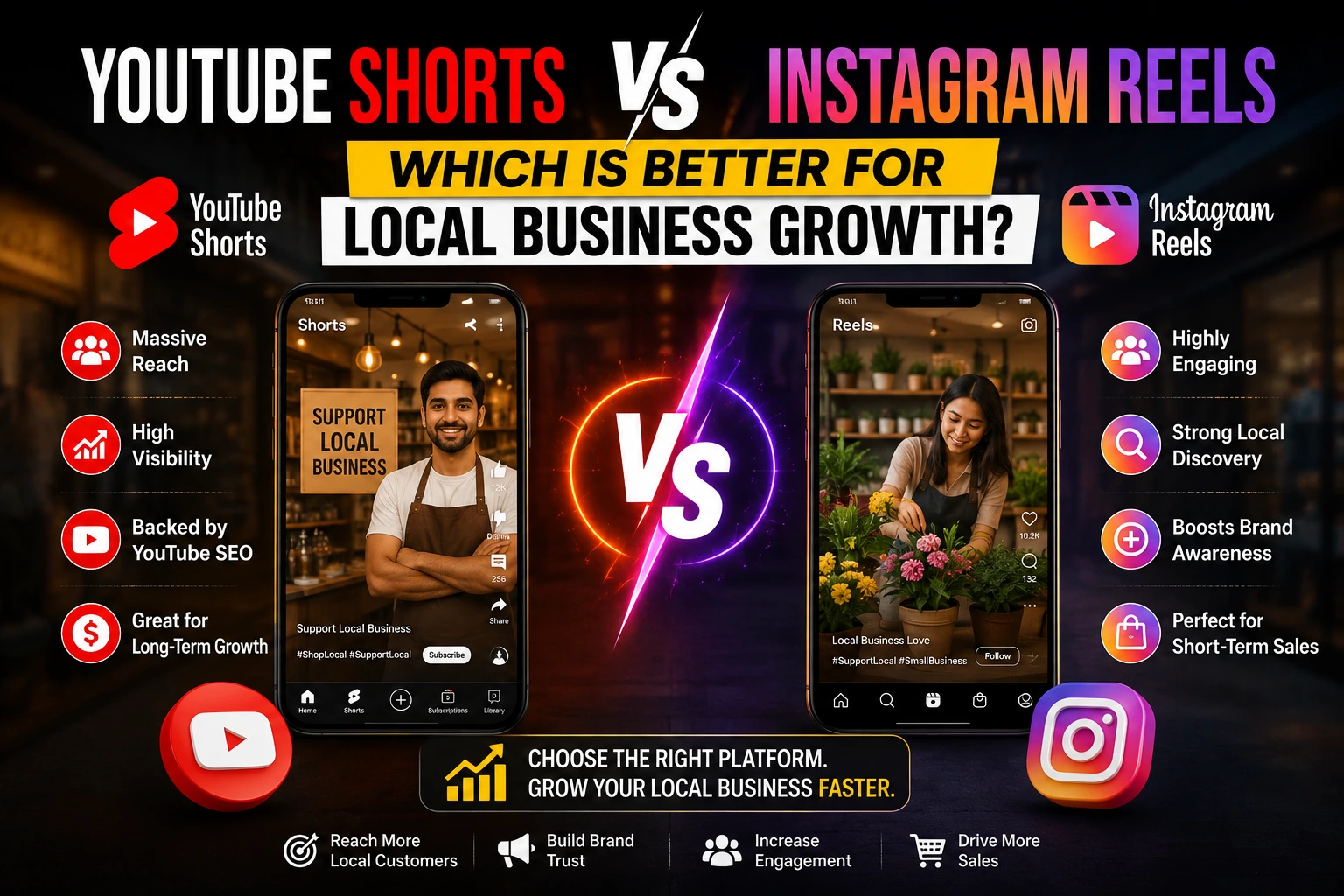
If you need enquiries, walk-ins, and messages soon, Instagram Reels is usually the stronger choice; it's built around local discovery, profile visits, and direct messaging, the exact behaviours that turn viewers into customers.If you want to be found by people searching for what you offer, months or years from now, YouTube Shorts has the edge, since it's powered by search and stays discoverable long after posting.
The right answer depends on your goal, not on which platform is "better."
Why Short-Form Video Marketing Matters for Local Businesses
Customer behaviour has changed. People don't just search "salon near me" anymore; they scroll short videos to see the place before they visit. A 20-second clip of your café's ambience or your gym's energy builds more trust than a paragraph of text ever could.Short videos work because they demand almost nothing from the viewer: no reading, no waiting. Someone scrolling in bed can decide, in seconds, whether your business feels like the right fit.
For local businesses, this matters because trust is the biggest barrier to a first visit, and video removes uncertainty faster than photos, reviews, or word of mouth.
Understanding YouTube Shorts
YouTube Shorts live inside the world's second-largest search engine. That single fact changes everything about how they work. You need to understand how the algorithm of YouTube Shorts works.People don't just get Shorts recommended; many find them by searching something specific, like "best haircut tutorial" or "how to choose an engagement ring." A well-made Short can keep bringing in views and customers for months after posting.
YouTube's algorithm rewards watch time and topic relevance over follower count. A brand-new channel with zero subscribers can still get discovered if the content answers a real question.
The trade-off: YouTube audiences tend to be more research-driven and often watch before they're ready to buy, while Shorts lack the easy "message the business" pathway Instagram offers.
Understanding Instagram Reels
Instagram Reels live inside a platform people already use to browse local businesses, message friends, and follow brands they like. That context shapes everything. You need to understand how the Instagram ranking system works and all the hidden factors.Reels get distributed through the Explore page, Reels feed, and hashtag or location discovery, often to people who already follow local pages similar to yours. The audience is warmer and more likely scrolling with intent to discover something nearby.
Instagram also makes it effortless to go from "I like this" to "I want to ask about this." One tap opens a DM, a profile visit, or a bio link; that short distance between interest and action is why Instagram often converts faster.
The limitation: Reels have a shorter shelf life; once the algorithm stops pushing a video, it rarely resurfaces, unlike a Short that can appear in search a year later.
YouTube Shorts vs Instagram Reels: Key Differences
Audience Behaviour
Instagram audiences browse socially and locally. YouTube audiences arrive with a specific question, which makes intent stronger but conversion slower.Reach and Discoverability
Instagram spreads content through social and location-based discovery. YouTube spreads content through search and topic relevance, giving older videos a longer window to be found.Search Visibility
YouTube Shorts can rank in Google and YouTube search results for years. Instagram Reels are rarely searchable outside the app.Customer Intent
Instagram viewers are often closer to acting messaging, visiting, booking. YouTube viewers are often still researching or comparing.Content Lifespan
A Reel typically performs well for 3–7 days. A well-made Short can keep earning views for months or years.Local Customer Discovery
Instagram's location tags and Explore page make it easy for someone nearby to stumble onto your business. YouTube doesn't emphasise location the same way.Lead Generation
Instagram's DM and bio-link system makes enquiries effortless. YouTube usually needs an extra click: a link in the description or comments.Brand Building
Instagram builds a visual, relatable identity. YouTube builds authority, especially for education-based businesses.Community Building
Instagram comments and DMs create ongoing conversations. YouTube comments lean more question-and-answer, which suits informational businesses.Content Creation Process
Reels reward quick, trend-aware, phone-shot clips. Shorts reward a clear hook and a specific, searchable topic even filmed just as simply.Which Platform Gets More Organic Reach?
"Reach" isn't the same as "results," and this is where most businesses get misled.Instagram distributes new content to a wide audience quickly, then narrows to people who engage so your reach can spike fast and fade fast. YouTube distributes more gradually through search, so a Short might start slow and keep climbing for weeks.
A video with 50,000 views but no messages or visits hasn't done its job. One with 2,000 views that brings five enquiries has. Reach is a vanity number unless it's tied to a next step your audience can take.
If you want to grow your business and generate more sales, or learn about different social media platforms, join our Social Media Marketing Course to gain an in-depth understanding of each platform.
Which Platform Generates More Local Customers?
In our experience, Instagram tends to generate faster customer action, while YouTube generates slower but more durable discovery.Instagram helps through direct messages about pricing or bookings, profile visits that lead to a saved contact, and calls or WhatsApp enquiries right after watching.
YouTube helps through search-based discovery when someone types a specific question, education that builds trust before a visit, and long-term visibility that keeps bringing viewers without new effort.
A gym posting a "3 exercises for lower back pain" Short might get slow, steady traffic from people searching that problem for the next year. A salon posting a Reel of a client's colour transformation might get five DMs within 48 hours. Both are wins; they just work on different timelines.
Which Platform Is Better for Different Businesses?
Restaurants — Instagram Reels win here. Food looks best in a fast, social format, and diners often decide where to eat within minutes of watching.Cafés — Instagram Reels, especially with location tags. Seasonal drinks and cosy interiors thrive on local discovery.
Salons — Instagram Reels. Before-and-after transformations build trust visually and often lead straight to a DM booking.
Gyms — Both: YouTube Shorts for educational workout tips, Instagram for offers, energy, and member stories.
Real Estate — YouTube Shorts for property tours and buyer education; Instagram for immediate leads on hot listings.
Jewellery Stores — Instagram Reels for collection launches and craftsmanship close-ups that drive enquiries.
Interior Designers — Both: YouTube for project journeys and design education, Instagram for the visual "wow" of finished rooms.
Coaching Institutes — YouTube Shorts. Education-first content is exactly what YouTube's search-driven audience wants.
Retail Shops — Instagram Reels for new arrivals and styling demos that convert quickly.
Consultants and Freelancers — YouTube Shorts, since problem-solving content builds authority and gets found by people actively searching for help.
The L.O.C.A.L Framework for Choosing the Right Platform
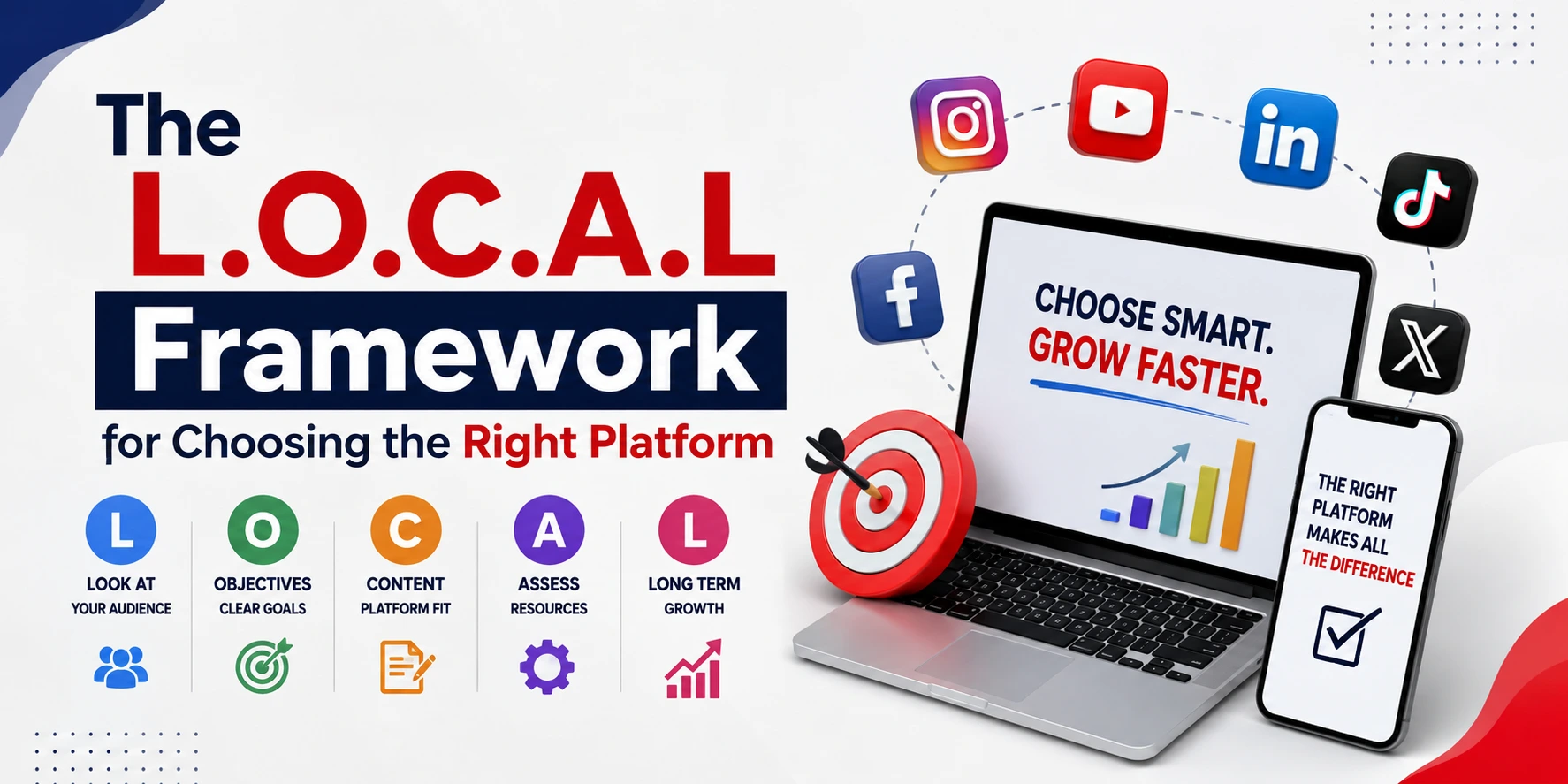
Use this simple framework whenever you're unsure which platform deserves your time.L — Location: Does your business depend on nearby customers walking in? If yes, weight your effort toward Instagram, where local discovery is stronger.
O — Objective: Quick enquiries and bookings favour Instagram. Long-term authority and brand trust favour YouTube.
C — Customer Behaviour: Do your customers scroll socially, or search for answers before choosing a business? Match the platform to that habit.
A — Ability: Be honest about what you can consistently create. A platform you can post on weekly beats a "perfect" platform you abandon after two videos.
L — Long-Term Growth: If ongoing search visibility matters to your future, YouTube compounds over time in a way Instagram doesn't.
Run your business through these five questions, and the right starting platform usually becomes obvious.
Should Businesses Use Only One Platform or Both?
One platform is enough when you're starting out, short on time, or need results quickly. Pick based on the L.O.C.A.L framework and commit for at least 60 days before adding a second platform.Both platforms make sense once filming, editing, and posting no longer feel overwhelming.
The easiest way to manage both is repurposing: film one video, keep it vertical and under 60 seconds, then adapt it for each platform. For Instagram, add trending audio, on-screen text, and a location tag. For YouTube, add a clear, search-friendly title and a text hook in the first frame. Small adjustments, one filming session.
Common Mistakes Businesses Make With Short Videos
Posting without strategy — Filming wastes effort randomly. Fix: decide if each video should build trust, get enquiries, or educate before you hit record.Only chasing views — High views with zero enquiries means the wrong audience found the video. Fix: measure messages, calls, and saves, not just views.
Ignoring local keywords — Skipping location names and service terms makes discovery harder. Fix: mention your area and service naturally in captions and speech.
No clear CTA — Viewers rarely act unless told what to do next. Fix: end every video with one simple instruction, like "DM us to book."
Copying trends blindly — An irrelevant trending sound confuses viewers. Fix: only use trends that fit naturally into your message.
Poor first seconds — Slow intros lose viewers instantly. Fix: show the result, question, or hook within the first two seconds.
Inconsistent posting — Bursts of activity followed by silence kill algorithm momentum. Fix: post on a realistic, repeatable schedule, even twice a week.
No customer-focused content — Videos about the owner's opinions, without addressing customer needs, don't convert. Fix: build videos around common customer questions.
Ignoring analytics — Posting blindly without reviewing performance wastes future effort. Fix: check weekly which videos got saves or messages, and repeat that format.
Creating videos without understanding audience — Content made for everyone often fits no one. Fix: picture one real customer type and speak directly to them.
Best Practices for Local Business Short-Form Video Marketing
-
Open with a hook that shows the outcome, not the setup
-
Use local keywords naturally in captions and speech
-
Build content around real customer questions
-
Show behind-the-scenes moments to build trust
-
Mix in short educational clips that establish expertise
-
Include genuine customer testimonials
-
Highlight offers with a simple next step
-
Post consistently rather than in bursts
30-Day Short Video Marketing Action Plan
Week 1 — Planning and research: List ten common questions your customers ask, note what competitors post, and choose your primary platform using the L.O.C.A.L framework.Week 2 — Creating and posting: Film and post three to four videos, mixing customer-focused and educational content. A phone and good lighting are enough.
Week 3 — Testing formats: Try different hooks, lengths, and topics. Track which videos get saves, shares, or messages, not just views.
Week 4 — Improving based on analytics: Review your best and worst performers. Double down on what drove real enquiries, and drop what didn't work.
By day 30, you won't have a perfect strategy but you'll have real data on what your audience responds to.
Future of Short-Form Video Marketing
Video search is becoming a bigger part of how people find local businesses, and AI-powered discovery tools are starting to summarise and recommend video content in search results. This makes well-titled, clearly spoken videos more valuable, not less.Authenticity is also becoming a bigger advantage than production quality. Simple, honest videos of real products, spaces, and people tend to build more trust than polished but generic content.
Frequently Asked Questions
Which is better for business, Instagram Reels or YouTube Shorts?
It depends on your goal: Reels for fast local enquiries, Shorts for long-term search visibility.Can YouTube Shorts bring customers?
Yes. They work slower than Instagram but can bring steady discovery through search, sometimes for years after posting.Are Instagram Reels better for local businesses?
Often yes, especially for businesses relying on foot traffic, thanks to location tagging and easy direct messaging.Should small businesses use both platforms?
Eventually. Start with one platform based on your goal, then add the second once your content process feels manageable.How often should businesses post Shorts or Reels?
Two to three times a week is a realistic, sustainable starting point.Do YouTube Shorts help SEO?
Yes. They can appear in YouTube and Google search results, especially with specific, searchable titles and speech.Can Instagram Reels increase sales?
Yes, particularly with a clear call to action that leads viewers toward a message, call, or visit.Which platform is easier for beginners?
Instagram Reels, thanks to simpler editing tools and a more forgiving, casual content style.Do views matter for business?
Only if they lead to action. Fewer views with real enquiries beats views alone.What type of videos work best for local businesses?
Customer-focused videos that answer real questions, show real results, or highlight offers.How long should business videos be?
15–45 seconds is usually enough to make a point without losing attention.How do I measure short video success?
Track messages, profile visits, saves, and shares alongside views.Conclusion
There's no universal winner between YouTube Shorts and Instagram Reels; only the right platform for your specific business, goals, and customer behaviour.If your customers make quick, local decisions where to eat tonight, what to buy this weekend, start with Instagram Reels. If they research before deciding who to hire or what to invest in, start with YouTube Shorts.
Don't wait for a perfect strategy before you start filming. Pick your platform using the S.E.T. framework, commit to 30 days of consistent posting, and adjust based on what you learn. The businesses that grow fastest with short-form video aren't the most polished ones; they're the ones that actually showed up consistently.
If you are interested and want to learn in depth, our Digital Marketing Course in Mohali offer practical training in social media marketing, SEO, paid ads, automation, and email marketing, all with 30+ AI tools.
If you'd like to go deeper, you may also find our guides on Instagram Marketing, YouTube Marketing, and Google Business Profile optimisation useful for rounding out your overall local marketing strategy.