AI Automation in Digital Marketing: Complete Guide for 2026 (Tools, Benefits & Strategies)

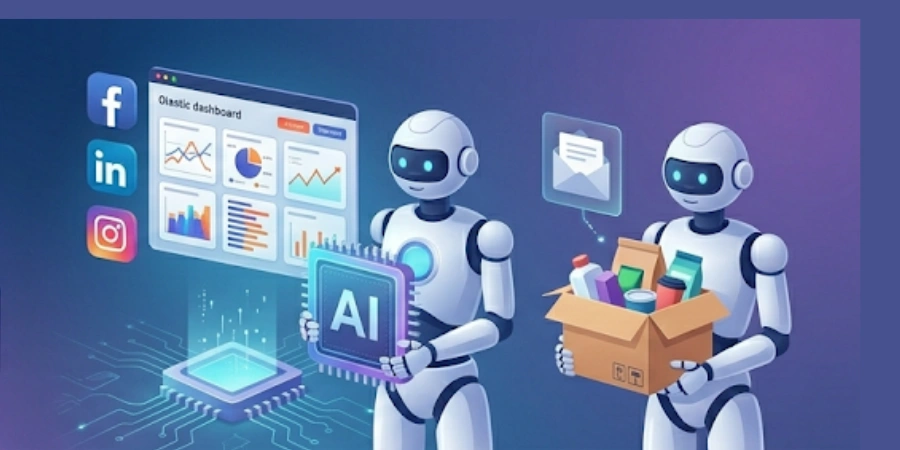
Digital marketing used to be a game of hours. Hours spent scheduling posts, writing email sequences, adjusting ad budgets, and analysing spreadsheets. Today, a lot of that work is handled automatically by artificial intelligence.
AI automation in digital marketing is not just a trend for big corporations. Small businesses, freelancers, bloggers, and creators are using it right now to save time, reach the right people, and grow faster than ever before.
This guide covers everything you need to know about what AI automation actually is, how it works in real marketing situations, the best tools available today, and how to use it in a way that actually gets results.
What Is AI Automation in Digital Marketing?
AI automation in digital marketing means using software powered by artificial intelligence to handle marketing tasks on your behalf automatically, and based on real data.Instead of manually deciding when to send an email, which audience to target, or how to adjust your ad spend, AI tools study user behaviour, recognise patterns, and take action without you needing to do it every single time.
Think of it as hiring a very fast, very logical assistant that works 24 hours a day, never gets tired, and makes decisions based on data rather than guesswork.

How AI Automation Actually Works
Understanding the process makes it easier to use it strategically. AI automation in marketing works in three broad stages.Stage 1. Data Collection: AI tools gather information from multiple sources: your website traffic, social media engagement, email open rates, ad performance, customer purchase history, and even how long a user spends on a particular product page.
Stage 2. Data Analysis: Once the data is collected, the AI identifies patterns. It learns what type of user is likely to buy, what time of day gets the most engagement, which ad creative performs better, and which email subject lines get opened more often.
Stage 3. Automated Action: Based on what it has learned, the AI takes action. It sends a follow-up email, adjusts an ad budget, shows a personalised product recommendation, or schedules a post at a particular time, all without manual input.
This loop of collect, analyse, and act is what makes AI automation so powerful over time. The more data it processes, the smarter it gets.
7 Ways AI Automation Is Used in Digital Marketing
1. Email Marketing Automation
Email is still one of the highest-converting marketing channels, and AI has made it significantly more effective.AI-powered email tools do not just send scheduled emails; they send the right email to the right person at the right time. If someone visits your pricing page but does not sign up, the AI triggers a follow-up email automatically. If a customer adds items to their cart and leaves, an abandoned cart email goes out within hours.
This kind of behaviour-based email automation consistently outperforms broadcast emails in both open rates and conversions.
Popular tools: Mailchimp, ActiveCampaign, Klaviyo
2. Social Media Automation
Managing social media manually across multiple platforms is exhausting. AI tools now handle scheduling, caption suggestions, hashtag recommendations, and even performance analysis, all in one dashboard.More advanced AI tools can also identify the best time to post based on when your specific audience is most active, not just generic best-practice times. This leads to higher reach and engagement without any extra effort.
Popular tools: Hootsuite, Buffer, Later
3. Paid Advertising Optimisation
This is where AI automation delivers some of its most measurable results. Google Ads and Meta Ads both have built-in AI systems that automatically adjust your bids, audience targeting, and ad placements based on performance data.Instead of manually monitoring campaigns every day and guessing where to spend more, the AI shifts budget toward the ads that are converting and pulls back from the ones that are not. This improves your return on ad spend (ROAS) without increasing your budget.
Smart Campaigns on Google and Advantage+ on Meta are both AI-driven systems that have helped advertisers significantly reduce their cost per acquisition.
4. Chatbots and Automated Customer Support
AI chatbots are now a standard feature on websites, WhatsApp, and Instagram DMs. They can answer frequently asked questions, guide users through the buying process, collect lead information, and even handle basic customer complaints 24 hours a day.For small businesses, especially, this is a game-changer. You do not need a full customer service team to respond to every inquiry at any hour. The chatbot handles it, and when the question is too complex, it passes the conversation to a human agent.
Popular tools: Tidio, ManyChat, Intercom
5. Personalised Product Recommendations
If you have ever seen a "You may also like" or "Customers also bought" section on an e-commerce site, that is AI in action. Recommendation engines analyse a user's browsing history, purchase behaviour, and the behaviour of similar users to suggest products they are likely to buy.Amazon built much of its success on this system. But today, even small Shopify stores can plug in AI recommendation tools and offer the same personalised experience.
6. AI-Powered Content Creation
AI cannot fully replace good human writing, but it is an incredibly useful tool for speeding up content production. AI writing tools can help you generate blog post outlines, write first drafts, create ad copy variations, and produce social media captions in a fraction of the time.The key is to use AI as a starting point and then refine the content with your own knowledge, experience, and brand voice. Content that feels human and provides genuine value will always perform better than raw AI output.
Popular tools: ChatGPT, Jasper AI, Copy.ai
7. SEO Automation
AI has made keyword research, content optimisation, and competitor analysis significantly faster. Instead of spending hours building a content brief manually, AI SEO tools can analyse top-ranking pages, identify content gaps, suggest related keywords, and give you a clear structure to follow.Some tools even track your rankings daily and alert you when competitors gain ground, so you can respond quickly.
Popular tools: Surfer SEO, SEMrush, Ahrefs
Benefits of AI Automation in Digital Marketing
Saves significant time. Tasks that once took hours, like segmenting an email list, researching keywords, or optimising ad bids, now happen automatically or in minutes.More accurate targeting. AI finds patterns in data that humans would miss. This means your ads reach people who are actually likely to convert, reducing wasted spend.
Higher ROI. Better targeting and automated optimisation consistently lead to lower cost per lead and higher conversion rates.
Works around the clock. Your AI tools do not sleep. They monitor, adjust, and respond to user behaviour at any hour of the day.
Scales with your business. Whether you have 100 customers or 100,000, AI automation handles the volume without requiring you to hire proportionally more people.
Disadvantages You Should Be Honest About
The initial cost can be high. Premium AI marketing tools are not always cheap. If you are just starting, the monthly subscriptions can add up quickly. Start with free tiers or affordable entry-level tools and upgrade as your revenue grows.There is a learning curve. Setting up automation workflows, understanding campaign data, and configuring AI tools correctly takes time. Expect a few weeks before things run smoothly.
Over-automation can feel cold. If every touchpoint a customer has with your brand feels robotic, it damages trust. AI should handle efficiency, but the warmth and personality of your brand still need to come from real humans.
You are dependent on the platform. If a tool shuts down, changes its pricing, or has a technical issue, your automated workflows stop working. Always have a backup plan.
How to Build an AI Automation Strategy That Works
A lot of people buy tools and expect magic to happen. Strategy is what separates the businesses that see results from the ones that waste money.Step 1: Start with a clear goal. Are you trying to generate more leads, increase sales, improve customer retention, or grow your social media following? Pick one primary goal and build your automation around it.
Step 2: Map your customer journey. Understand every step your customer takes from first hearing about you to making a purchase. Identify where delays, drop-offs, or missed opportunities are happening. Those are your automation opportunities.
Step 3: Automate repetitive tasks first. Start with the tasks that take the most time and have clear, predictable logic, like welcome emails, appointment reminders, or social media posting. These are the easiest to automate and the quickest to show results.
Step 4: Monitor your data. Automation does not mean set-and-forget. Check your metrics weekly. Look at open rates, click-through rates, conversion rates, and cost per result. The data tells you what is working.
Step 5: Keep improving. Test different email subject lines. Try new ad creatives. Adjust your chatbot scripts. AI improves with data, but your strategy needs human thinking to keep evolving.
Skills You Need to Use AI Automation Effectively
You do not need to be a programmer. But you do need a basic understanding of the following:-
Digital marketing fundamentals: knowing what email marketing, paid ads, and SEO actually mean
-
Tool-specific knowledge: spending time learning whichever platforms you choose to use
-
Data interpretation: being able to read a dashboard and understand what the numbers mean
-
Content strategy: knowing what message to deliver at each stage of the customer journey
The Future of AI Automation in Digital Marketing
AI is deeply personalising, tailored to the individual, so that every email, every ad, and every product suggestion feels as if it were made specifically for that one person.Voice search, AI-generated video, predictive customer behaviour, and real-time campaign optimisation are all becoming standard features rather than advanced extras.
The businesses that adapt early will have an advantage. Not because they replaced human creativity, but because they used AI to handle the repetitive work, freeing up their time to focus on strategy, storytelling, and genuine customer relationships.
AI handles the speed. Humans handle the depth. Together, that combination is very hard to compete with.
Who Should Be Using AI Automation Right Now?
If any of the following describes you, AI automation can directly improve your results:-
Freelancers and solopreneurs who want to look and operate like a larger business
-
Small business owners who are handling marketing themselves and running out of time
-
Digital marketers who want to improve campaign performance and reduce manual work
-
Content creators and bloggers who want to grow their audience more efficiently
-
E-commerce store owners who want to increase repeat purchases and reduce cart abandonment
Final Thoughts
AI automation is not here to replace digital marketers. It is here to make them better. The people who embrace these tools and learn to use them strategically will do more, reach more people, and grow faster than those who stick entirely to manual methods.But the fundamentals still matter. Good marketing is still about understanding your audience, solving a real problem, and communicating clearly. AI just helps you do all of that at scale.
Start small. Pick one area, like email, ads, or social media and automate that first. Learn how it works. Then expand from there.
The future of digital marketing is already here. The question is whether you are using it.
If you want to gain in-depth knowledge, we also offer a Digital Marketing Course in Chandigarh, where you learn in-demand skills with practical training.