Instagram Algorithm Secrets: Hidden Ranking Factors (2026)
Introduction
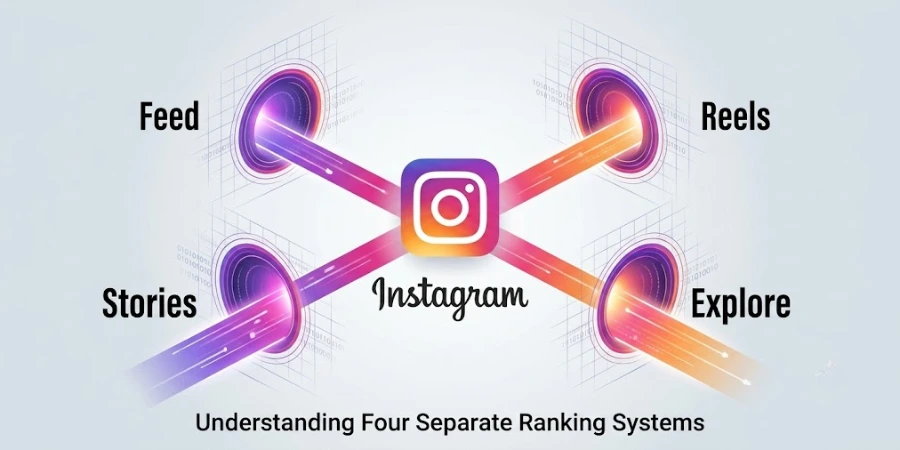
Most creators assume Instagram reach is random. One Reel gets 200 views, the next gets 20,000, and nothing about the effort put in explains the gap. That feeling of randomness is understandable, but it's not accurate.Instagram doesn't run on one algorithm. It runs on several separate ranking systems, each built for a different part of the app, each predicting something slightly different about what you'll enjoy. Instagram head Adam Mosseri has spent the last few years explaining this publicly, through creator videos, interviews, and Meta's own Transparency Centre. The information is out there it's just scattered.
This guide brings it together in one place: how Feed, Reels, Stories, Explore, and Search actually rank content, which signals genuinely matter, which popular advice is outdated, and what you can do differently starting today. No hacks, no invented secrets just how the system works and how to work with it.
Instagram now has roughly 3 billion monthly active users worldwide, which is exactly why understanding ranking matters so much: you're not just competing for attention, you're competing for a machine's prediction of what that attention is worth spending on you.
Quick Summary
How does the Instagram Algorithm work in 2026? Instagram doesn't use a single algorithm it uses multiple AI ranking systems, one each for Feed, Reels, Stories, Explore, and Search, and each predicts how likely you are to enjoy, engage with, or act on a piece of content. Across all of them, watch time, shares, and saves consistently outweigh likes, and original content is favoured over recycled or watermarked material.-
Instagram uses separate ranking systems, not one universal algorithm.
-
Watch time is one of the strongest signals, especially for Reels.
-
Shares and saves usually outweigh likes in importance.
-
Original, made-for-Instagram content gets stronger recommendation opportunities.
-
Negative feedback (like "Not Interested" taps) reduces future recommendations.
-
Audience satisfaction matters more than how often you post.
What Is the Instagram Algorithm?
The "Instagram Algorithm" is really a collection of machine learning systems, each predicting one thing: how likely is this specific person to value this specific piece of content? There's no single formula or fixed score; every feed is personalised because the system reacts to that person's own behaviour, not a universal ranking.These systems learn from patterns: what you've watched to completion, what you've saved, who you interact with, and what similar users engaged with. That's why two people following the same account can see completely different content from it, at completely different times.
Instagram Ranking Systems at a Glance
Each surface exists for a different reason, so each one weighs signals differently:| Surface | Main Goal | What It Weighs Most |
| Feed | Strengthen relationships with people you already follow | Relationship strength, saves, shares |
| Reels | Entertain and help you discover new creators | Watch time, replays, sends |
| Stories | Deepen existing relationships in real time | Reply likelihood, taps, viewing frequency |
| Explore | Introduce you to accounts you don't follow yet | Interest prediction, engagement velocity |
| Search | Help you find specific accounts, topics, or content | Keyword and semantic relevance |
How Instagram Feed Algorithm Works
Feed isn't designed for discovery. It's designed to strengthen relationships you already have, showing you posts from people Instagram predicts you'll genuinely want to see, ranked by predicted interest rather than posting time.-
Relationship — built through likes, comments, DMs, Story replies, profile visits, and tags; accounts you interact with often get prioritised.
-
Previous Interactions — past engagement predicts future interest, so regular commenters keep seeing more of your posts.
-
Time Spent Reading — lingering on a caption signals interest even without a like, so descriptive captions carry real weight.
-
Saves — signals lasting value, which is why educational posts and checklists often earn stronger distribution.
-
Shares — sending a post via DM or Story is one of the strongest quality signals, since people rarely share what they don't value.
-
Comments — real conversation outweighs a string of emojis.
-
Likes — still useful, but the weakest major signal compared to saves and shares.
-
Recency — new posts get a brief initial window; continued reach depends on response.
-
Content Quality — overall satisfaction increasingly shapes how far a post travels.
How Instagram Reels Algorithm Works
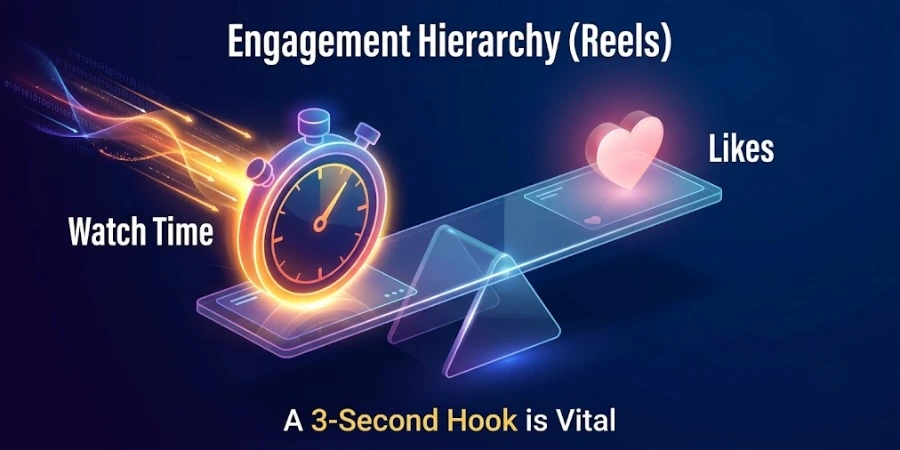
Reels exist for entertainment and discovery, not relationships which is why Reels can reach non-followers far more easily than Feed posts ever will. Instagram head Adam Mosseri has publicly confirmed that watch time, likes per reach (for people who follow you), and sends per reach (for people who don't) are the three most important signals across the platform, and Reels lean on all three heavily.-
Watch Time — retention and completion rate matter more than raw views. A short, tight Reel watched to the end beats a longer one people abandon. The first three seconds decide whether the rest gets seen at all.
-
Replays — rewatching signals strong satisfaction; tutorials and dense information earn these naturally.
-
Shares — DM and Story sends carry serious weight, treated as proof the content is worth recommending further.
-
Saves — educational Reels (tips, tutorials, how-to content) generate the most, since people bookmark what they'll use later.
-
Comments — genuine discussion outperforms short, low-effort comments.
-
Audio — trending audio can help, but isn't a guarantee; strong original audio works fine too.
-
Captions — clear, natural-language captions help Instagram understand and recommend your content accurately.
-
Hashtags — now aid categorisation rather than direct discovery; treat as context, not strategy.
-
Original Content — Instagram has publicly backed original creators, rewarding original filming and ideas over recycled content.
-
Watermarked Videos — visible watermarks from other platforms signal recycled content and typically see reduced recommendations.
-
Viewer Satisfaction — increasingly, whether people enjoyed it, would rewatch, or would recommend it matters more than any single metric above.
How Instagram Stories Ranking Works
Stories exist to deepen relationships you already have, so ranking leans heavily on past behaviour: how often you view someone's Stories, whether you reply, tap through, or use stickers like polls, questions, or emoji sliders. According to Mosseri, the top factors are how likely you are to tap into a Story, like it, or reply; Stories that spark a reaction move up. Interactive elements matter because they generate a direct response, a stronger signal than passive viewing, and completion rate feeds into future ranking too.How Instagram Explore Works
Explore introduces you to accounts you don't already follow, making it the surface with the most ranking signals, since it has the least relationship data to lean on. It relies heavily on interest prediction: what you've engaged with before, how similar content performed with similar users, and how quickly a post is gaining engagement (velocity) after publishing. Creator quality, topic relevance, and recommendation confidence factor in too. Freshness matters, but a well-performing older post can still resurface if engagement continues.Instagram Search Algorithm
Instagram Search has grown into something closer to a real search engine, understanding topics and language rather than only matching hashtags. Usernames, display names, bio text, and captions all carry keyword weight, and Instagram increasingly reads natural language rather than requiring exact-match tags. Alt text, location tags, and consistent topic focus help too. A profile with a clear, descriptive bio and captions using the actual words your audience searches for is discoverable in ways a vague, keyword-free profile never can be one of the most underused growth levers on the platform.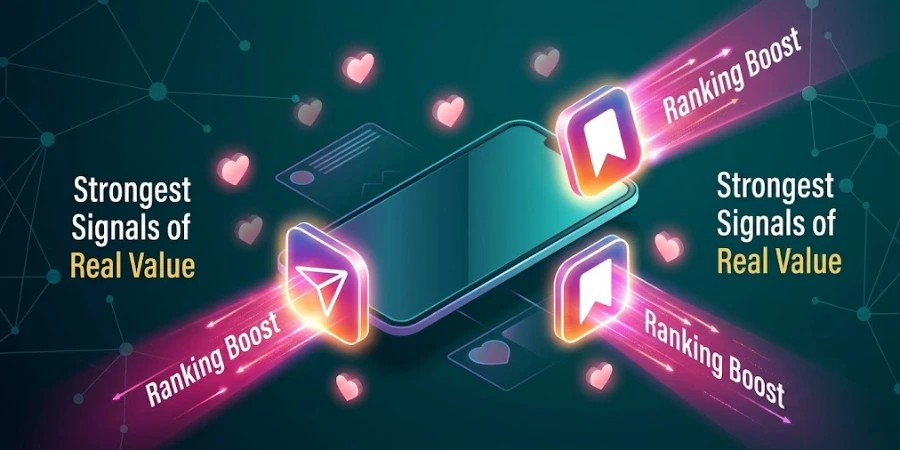
How Different Content Types Are Ranked
| Format | Best For | Typical Ranking Behaviour |
| Photos | Simple, high-quality moments | Ranked on relationship and saves |
| Carousels | Education, step-by-step content | Re-shown to non-completers, boosting repeat impressions |
| Reels | Discovery and entertainment | Ranked on watch time, replays, sends |
| Stories | Daily relationship-building | Ranked on tap-through, replies, completion |
| Instagram Live | Real-time connection and Q&A | Boosted by notifications and active participation |
| Collaborative Posts | Shared reach between accounts | Distributed to both audiences at once |
| Broadcast Channels | One-to-many creator updates | Ranked on open and reply rate, not public reach |
Top 20 Instagram Ranking Factors That Influence Reach
1. Watch Time
Instagram pays close attention to how long people watch your videos. Longer watch time signals that your content keeps viewers interested.2. Completion Rate
When users watch your video until the end, it tells Instagram that your content successfully delivered value.3. Shares
Shares are one of the strongest signals because they show people found your content valuable enough to send to others.4. Saves
Saved content usually provides long-term value, such as tips, tutorials, or useful information users want to revisit.5. Relationship With Followers
Instagram prioritises content from accounts users regularly interact with through likes, comments, messages, and profile visits.6. Comments
Meaningful conversations matter more than simple engagement. Detailed comments can indicate stronger audience interest.7. Content Originality
Original content generally performs better than recycled videos or reposted content with little added value.8. Overall Content Quality
Clear visuals, strong storytelling, and useful information improve viewer satisfaction and engagement.9. User Satisfaction
Instagram considers whether people enjoy your content and continue watching more posts from your account.10. Keyword Relevance
Using relevant keywords in captions, names, and descriptions helps Instagram understand your content and show it in search results.11. Content Recency
New content often receives an initial visibility boost, especially when it matches current audience interests.12. Replays
When users watch your video multiple times, it signals that the content has strong value or entertainment appeal.13. Profile Visits
A post that encourages users to explore your profile creates a stronger signal of interest.14. Follows After Viewing
When someone follows your account after seeing your content, Instagram sees it as a sign of strong content relevance.15. Account Trust
Consistent activity, authentic engagement, and following Instagram guidelines help build account credibility.16. Interest Prediction
Instagram predicts what users are likely to enjoy based on their previous behaviour and interactions.17. Session Time
Content that keeps users on Instagram longer can receive stronger distribution.18. Swipe-Away Rate
For Reels, losing viewers in the first few seconds can reduce reach because it signals weak initial interest.19. Watermarks and Reposted Content
Content with visible watermarks from other platforms may receive less distribution because Instagram prefers native content.20. Negative Feedback
Actions like hiding posts or selecting "Not Interested" indicate that users do not want similar content, which can reduce future reach.Hidden Ranking Signals
Instagram hasn't officially confirmed every signal it uses, so it's worth separating fact from pattern:Officially confirmed: watch time, likes per reach, sends per reach, saves, original content preference, and reduced distribution for watermarked or recycled video.
Observed behaviour and industry consensus (not officially detailed): swipe-away rate, repeat viewers, profile taps after viewing, follow-after-view rate, session duration, engagement velocity, and niche relevance. Creators and researchers consistently notice these patterns, and Instagram's own language about "predicting interest" supports them, but exact weightings haven't been published.
Treat the second group as informed patterns worth acting on, not guaranteed mechanics.
Recommendation Guidelines vs Community Guidelines
Many creators confuse these two, but they work completely differently, and Meta's own Transparency Centre draws a clear line between them.Community Guidelines are Instagram's core platform rules. Breaking them can mean removal, warnings, restrictions, or suspension think hate speech, violence, adult content, spam, or dangerous misinformation. This governs whether content can exist on the platform at all.
Recommendation Guidelines are different: the baseline standard for what Instagram will actively recommend to non-followers. Content can stay fully live and still be excluded from Explore or non-follower Reels if it's low-quality or borderline clickbait, engagement bait, misleading captions, recycled or watermarked content, or excessive reposting. Meta calls this a "remove, reduce, inform" strategy it has used since 2016. A post that's never taken down can still quietly underperform for reasons unrelated to Community Guidelines.
Negative Signals That Reduce Reach
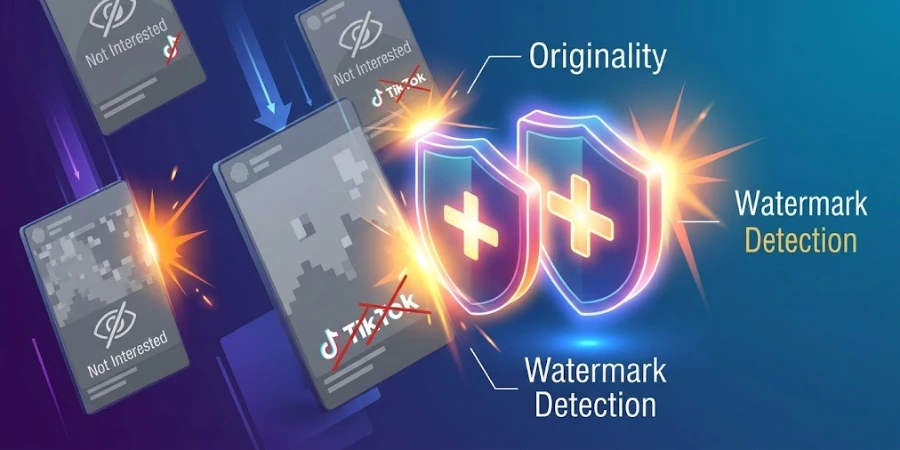
Instagram also detects behaviours that hurt viewer satisfaction. The official "Not Interested" tool is a confirmed example: tapping it demotes similar content going forward. Beyond that, quick swipe-aways, spam reports, copyright claims, misleading captions, duplicate content, obvious engagement bait ("comment YES if you agree"), and buying engagement all work against recommendation eligibility. The fix is consistent: make content genuinely worth the time, stay transparent, and never manufacture engagement artificially. Instagram's systems are built to detect and discount it.Original Content vs Reposted Content
Instagram has been public about favouring original creators and runs duplicate detection to spot identical videos reposted across multiple accounts, especially with a visible watermark from another platform. Original filming, editing, and storytelling get the strongest recommendation opportunities. Reaction videos, remixes, and thoughtful repurposing aren't automatically penalised; that's treated differently from lazy reposting with someone else's logo still visible. Re-editing repurposed content for Instagram and removing watermarks makes a measurable difference.Does Instagram Shadowban Accounts?
Officially, no. Mosseri has repeatedly said "shadowban" isn't a term Instagram uses, and in early 2025 stated Instagram does not limit reach within connected ranking; reach among existing followers isn't being secretly suppressed. What he has acknowledged is that content violating or bordering on the guidelines can lose recommendation eligibility, reducing reach to non-followers specifically. That's a real, confirmed mechanism, just not the invisible, everyone-punished-for-no-reason idea "shadowban" usually implies.If reach drops suddenly, check Account Status (Settings > Account > Account Status) for restrictions and why. Recovery steps: review recent posts for guideline issues, remove watermarks, stop artificial engagement tactics, and focus on content people finish watching. Drops are far more often weak retention than a hidden penalty.
Instagram Insights: Which Metrics Actually Matter?
| Metric | What It Tells You | How to Improve It |
| Watch Time / Retention | Whether content holds attention | Stronger hooks, tighter editing |
| Completion Rate | Whether the ending gets reached | Shorter, more focused Reels |
| Shares (Sends) | Worth recommending to others | Make content worth forwarding |
| Saves | Lasting, reusable value | Add practical information |
| Comments | Depth of engagement | Ask real questions |
| Profile Visits | Curiosity beyond one post | Strong bio, clear theme |
| Follows After Viewing | Long-term interest | Consistent value across posts |
| Returning Viewers | Audience loyalty | Consistent, familiar themes |
30-Day Instagram Growth Plan
Week 1 — Audit. Review recent posts, identify your strongest performers by watch time and saves (not likes), study your Insights properly, and optimise your bio and profile for search.Week 2 — Hooks and Captions. Rework your opening three seconds on Reels, tighten captions for clarity and keyword relevance, and test two different content formats.
Week 3 — Shares and Saves. Create genuinely useful, educational content, invite real conversation in captions, and reply to comments quickly to keep threads active.
Week 4 — Review and Repeat. Study what worked, identify your winning topics, double down on them, and build a realistic publishing rhythm rather than chasing a single viral moment.
Instagram Algorithm Myths vs Facts
| Myth | Fact |
| Business accounts get lower reach | Account type doesn't directly affect ranking |
| Hashtags are dead | They aid categorisation, not direct discovery |
| Posting daily guarantees growth | Retention and quality matter far more |
| Deleting posts hurts the algorithm | No confirmed evidence supports this |
| Instagram only pushes large creators | Explore is built to surface unfollowed accounts |
| Perfect posting times guarantee success | Content quality decides the outcome |
| Longer captions always perform better | Clarity and relevance matter more than length |
| More followers mean more reach | Reach depends on engagement, not follower count |
A Practical (Hypothetical) Example
Situation: A small creator account posts consistently but Reels rarely pass 500 views.Problem: Insights show most viewers drop off within the first two seconds, and several recent Reels carry a visible watermark from another app.
Changes Made: Re-edited the opening three seconds around a specific hook, removed watermarks, and shifted captions to plainly describe the topic.
Result Observed: Average watch time and completion rate both improved, and Reels began reaching more non-followers through recommendations.
Lesson: The issue was never the algorithm being unfair; it was retention and originality, both fixable.
Common Mistakes Creators Make
Even good content can struggle if you make mistakes that reduce audience satisfaction. Here are some of the most common issues and simple ways to fix them.Focusing Only on Likes
Likes matter, but saves, shares, and watch time often have a bigger impact on reach. Review all engagement metrics instead of likes alone.Ignoring Watch Time
If viewers leave within the first few seconds, your content is less likely to be recommended. Focus on stronger hooks and better retention.Weak First Three Seconds
A slow introduction can lead to quick swipes. Start with an interesting visual, question, or result to grab attention immediately.Posting Inconsistently
Long gaps between posts make it harder to build momentum. Create a realistic posting schedule that you can maintain.Buying Engagement
Fake likes and followers don't build genuine audience trust. Focus on organic growth through valuable, original content.Using Irrelevant Hashtags
Broad or unrelated hashtags confuse Instagram about your content. Use a small number of highly relevant hashtags instead.Ignoring Search Optimisation
Many creators overlook keywords in their profile and captions. Add clear, descriptive keywords to improve discoverability.Copying Trends Without Originality
Following trends is useful, but simply copying others rarely builds a loyal audience. Add your own perspective or creative angle.Never Reviewing Instagram Insights
Without analysing performance, it's difficult to know what works. Check your Insights regularly and learn from your best-performing content.Blaming the Algorithm for Every Drop in Reach
Lower reach isn't always caused by the algorithm. Review your content quality, retention, and Account Status before assuming you've been "shadowbanned."Best Practices Checklist
-
Build stronger hooks for the first three seconds of every Reel.
-
Prioritise viewer satisfaction over vanity metrics.
-
Encourage saves with genuinely useful, reusable content.
-
Encourage shares by making content worth sending to a friend.
-
Write descriptive, keyword-relevant captions.
-
Optimise your bio and profile for Search.
-
Review Insights weekly, focusing on watch time and saves.
-
Prioritise original filming over reposted content.
-
Respond to comments and DMs promptly.
Future of the Instagram Algorithm
Reasonably expected, based on Instagram's own public direction: more AI-assisted recommendations, a stronger emphasis on originality as AI-generated content becomes widespread, improved semantic search, and deeper personalisation based on satisfaction rather than raw engagement. Mosseri has pointed to authenticity becoming more valuable precisely because polished, AI-made content is now easy to produce; raw, human content may stand out simply by being real. None of this is guaranteed; it's stated direction plus reasonable industry expectation, not a confirmed roadmap.Key Takeaways
-
Instagram uses multiple ranking systems, not one universal algorithm.
-
Watch time, sends, and saves consistently outrank likes.
-
Feed rewards relationships; Reels and Explore reward discovery and satisfaction.
-
Original content is favoured; watermarked reposts lose recommendation eligibility.
-
"Shadowban" isn't an official term, but reduced recommendation eligibility is real.
-
Community Guidelines govern removal; Recommendation Guidelines govern reach.
-
Account Status is the most reliable way to check for real restrictions.
-
Hashtags now aid categorisation, not primary discovery.
-
Consistency helps, but retention and originality matter more.
-
Weekly Insights reviews beat guessing at what's working.
Frequently Asked Questions
What is the Instagram Algorithm?A collection of separate ranking systems, one for each Feed, Reels, Stories, Explore, and Search, predicting how likely you are to value specific content.
How does Instagram rank Reels?
Mainly by watch time, replays, and shares, with a strong preference for original, non-watermarked content.
Does watch time matter more than likes?
Yes, watch time and completion rate are consistently stronger predictors of distribution.
Are hashtags still important?
They help categorise content but no longer drive discovery the way they once did.
Can reposting reduce reach?
Yes, particularly when watermarks or duplicate content are detected across accounts.
Does deleting posts hurt rankings?
No confirmed evidence supports this.
What causes low reach?
Usually weak retention or low originality, rarely a hidden penalty.
How do I reach the Explore page?
Strong hooks, high completion rates, and content similar to what's already performing in your niche.
How does Instagram Search work?
It reads captions, bios, and usernames semantically, rather than only matching hashtags.
What is recommendation eligibility?
Whether your content qualifies to be shown to non-followers, based on the Recommendation Guidelines.
How often should I post?
Consistently and sustainably; frequency matters far less than retention and quality.
Do business accounts get lower reach?
No. Instagram has confirmed account type doesn't directly affect ranking.
How can small creators grow in 2026?
Prioritise watch time, saves, and shares over follower count, and review Insights regularly to double down on what works.
Conclusion
Instagram doesn't reward hacks, tricks, or perfect posting times. It rewards content people genuinely enjoy, finish watching, and want to share. Every ranking system on the platform is ultimately trying to measure some version of that. Chasing follower count or raw likes will always feel unpredictable, because that isn't what's actually being optimised for anymore.If you are interested and want to learn in depth, our Digital Marketing Course in Chandigarh offer practical training in social media marketing, SEO, paid ads, automation, and email marketing, all with 30+ AI tools.
The more useful approach is to experiment deliberately, measure what happens in your Insights, and improve consistently rather than chasing a single viral moment. Study your watch time. Study your saves. Notice what people actually finish watching, and do more of it. An Instagram Reels Strategy guide or a Best Time to Post breakdown can help refine the details, but the fundamentals here will still matter regardless of what changes next.