
Types of Content That Drive Traffic: Complete Guide (2025)
Let’s be honest. I’ve seen hundreds of websites that post content every day, but their traffic rarely moves; it just stays at the same number. On the other hand, some websites post only twice a month and get thousands of visitors.
So, what’s the difference? It’s not about how often you post. It’s about creating the right type of content that people search for, read, and share.
Many students and content creators want to understand how websites get traffic or how social media works. Learning practical digital skills, such as through a digital marketing course after 12th, can help you apply these strategies in real life.
In this guide, I’ll show you types of content that really drive traffic, why they work, and how you can start using them today. A strong content marketing strategy focuses on using the right content formats to drive organic traffic and long-term growth.
Why Most Content Fails to Drive Website Traffic
Before we dive into types of content, let’s understand why most content doesn’t get traffic.Here are the common mistakes:
Writing Without Research – Creating content for topics nobody searches for is a waste of time and effort.
Creating for Yourself – Writing about what you like instead of what your audience wants makes your content invisible.
Ignoring Search Intent – If users want product recommendations, don’t give them history lessons.
Publishing and Forgetting – Without promotion, updates, or optimization, content won’t grow.
1. Long-Form Educational Content That Drives Organic Traffic
Long, detailed posts are the backbone of authority websites. They cover a topic thoroughly, answer questions, and provide tips and tricks.What to Include:
-
Ultimate Guides & How-To Posts - Step-by-step instructions from start to finish.
-
Pillar Content -Long posts (2,000–4,000+ words) acting as a central hub for a topic.
-
Evergreen Resources - Timeless guides like “SEO Basics” that stay relevant for years.
Why It Works:
Google favors depth. Long content:-
Ranks for multiple keywords
-
Keeps visitors on your site longer
-
Attracts natural backlinks
-
Shows authority
2. List-Based and Comparison Content for Higher Website Traffic
Lists and comparisons are easy to read and highly engaging. People love them because they can quickly find useful information.What to Include:
-
Listicles – “10 Tools Every Blogger Needs”
-
Comparison Posts – “WordPress vs. Shopify”
-
Alternative Lists – “Best Alternatives to [Popular Tool]”
-
Mistake Lists – “7 SEO Errors Killing Your Traffic”
Why It Works:
Lists save readers time, and comparisons target users who are ready to make a decision. Google also loves comparison tables, which often appear in Featured Snippets.3. Visual and Video Content That Increases Engagement & Traffic
Videos and visuals are no longer optional, but they have become essential. They make complex information easy to understand and keep people engaged.What to Include:
-
YouTube Tutorials – Can rank on both YouTube and Google Search
-
Short-Form Videos – Reels, Shorts, TikToks
-
Infographics – Shareable images that explain data or processes
Why It Works:
Videos and visuals increase time on site, make content easier to understand, and appeal to different types of learners. Adding videos to your blog is a double win for readers and viewers.4. Data-Driven and Authority Content for SEO Trust
Data-driven content builds trust and attracts backlinks. It shows your audience that your advice is based on real results.What to Include:
-
Case Studies – “How We Increased Traffic by 300%”
-
Original Surveys – Conduct your own research
-
Expert Roundups – Collect insights from industry leaders
Why It Works:
Original data and authority content naturally attract links and establish your site as a trusted source.5. Interactive and Community Content That Boosts User Engagement
Interactive content engages your audience directly, making them active participants rather than passive readers.What to Include:
-
FAQ Sections – Answer questions from Reddit, Quora, or blog comments
-
Quizzes and Polls – Encourage interaction and reduce bounce rates
-
Email Newsletters – Bring readers back to your site regularly
Why It Works:
FAQ content is great for Voice Search and Google’s “People Also Ask.” Engaging communities signals freshness and authority to Google.Content Distribution Strategy to Maximize Traffic
Even the best content won’t get traffic if no one sees it.-
Email Your List – Your subscribers are your most loyal traffic source
-
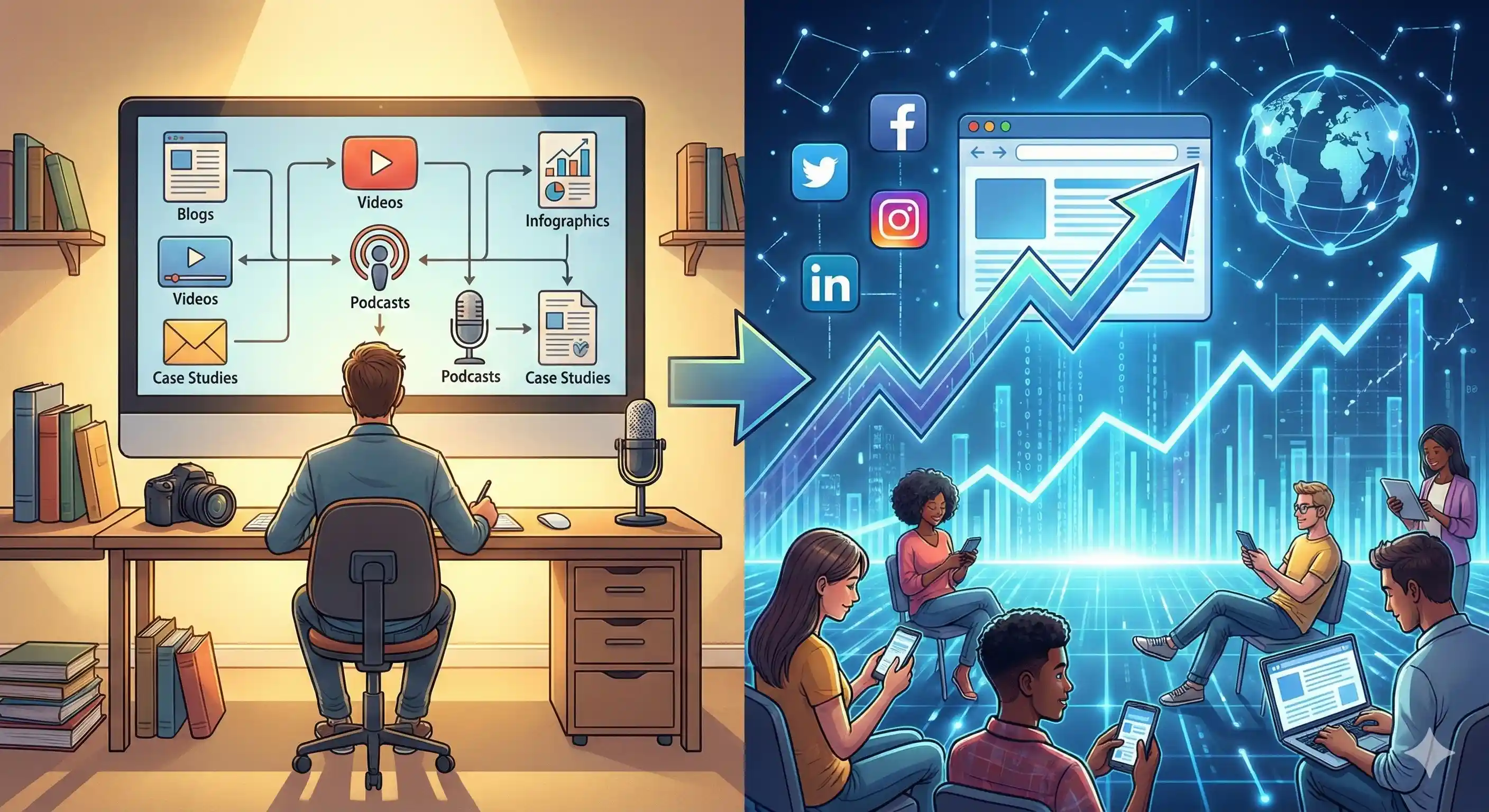
Repurpose Content – Turn one blog into a video, infographic, and multiple social media posts
-
Internal Linking – Link new content to high-traffic posts to pass on “SEO juice.”
-
Update and Republish – Refreshing old posts often drives faster results than new ones
3-Month Content Strategy to Grow Website Traffic
Month 1: Build Your Foundation
-
2 Comprehensive Guides – Research high-intent topics and write long-form guides (2,500+ words)
-
2 List Posts – Create shareable listicles or comparison posts
-
Audit Your Tech – Ensure Google Analytics and Search Console are set up
-
Lead Magnet – Offer a checklist or PDF to start collecting emails
Month 2: Expand and Engage
-
Diversify Media – Convert guides into videos or infographics
-
Target FAQ Traffic – Create posts around “People Also Ask” questions
-
Start a Newsletter – Send weekly emails linking to your best posts
-
Internal Linking – Connect new posts to old ones for better SEO
Month 3: Optimize and Scale
-
Update Old Content: Refresh your oldest posts with new data and SEO updates
-
Publish Authority Content: Case studies or original data posts
-
Promotion: Share your case studies for backlinks
-
Repurpose: Break long guides into social media tips and short-form videos
Final Thoughts
Traffic doesn’t happen overnight. But one useful, well-researched post always outperforms ten mediocre ones.Start with one type of content, master it, and expand from there. Focus on value, not volume, and your traffic will grow steadily over time.
If you want to gain in-depth knowledge, we also offer a Digital Marketing Course in Chandigarh, where you learn in-demand skills with practical training.
FAQs
1. What type of content drives the most website traffic?Long-form guides and how-to posts usually drive the most consistent traffic. But a mix of different content types works best.
2. How can beginners learn digital marketing skills effectively?
One way is to practice creating different content types like blogs, lists, and videos while following structured learning paths, such as an online digital marketing course. This gives hands-on experience with real-world examples.
3. How long does it take for content to bring traffic?
It depends. New websites may take 3 to 6 months, while established sites can see results in 4 to 8 weeks.
4. Does content type affect SEO rankings?
Yes. Search engines prioritise content that matches search intent, provides depth, and keeps users engaged. Different content formats help target different stages of the buyer journey.